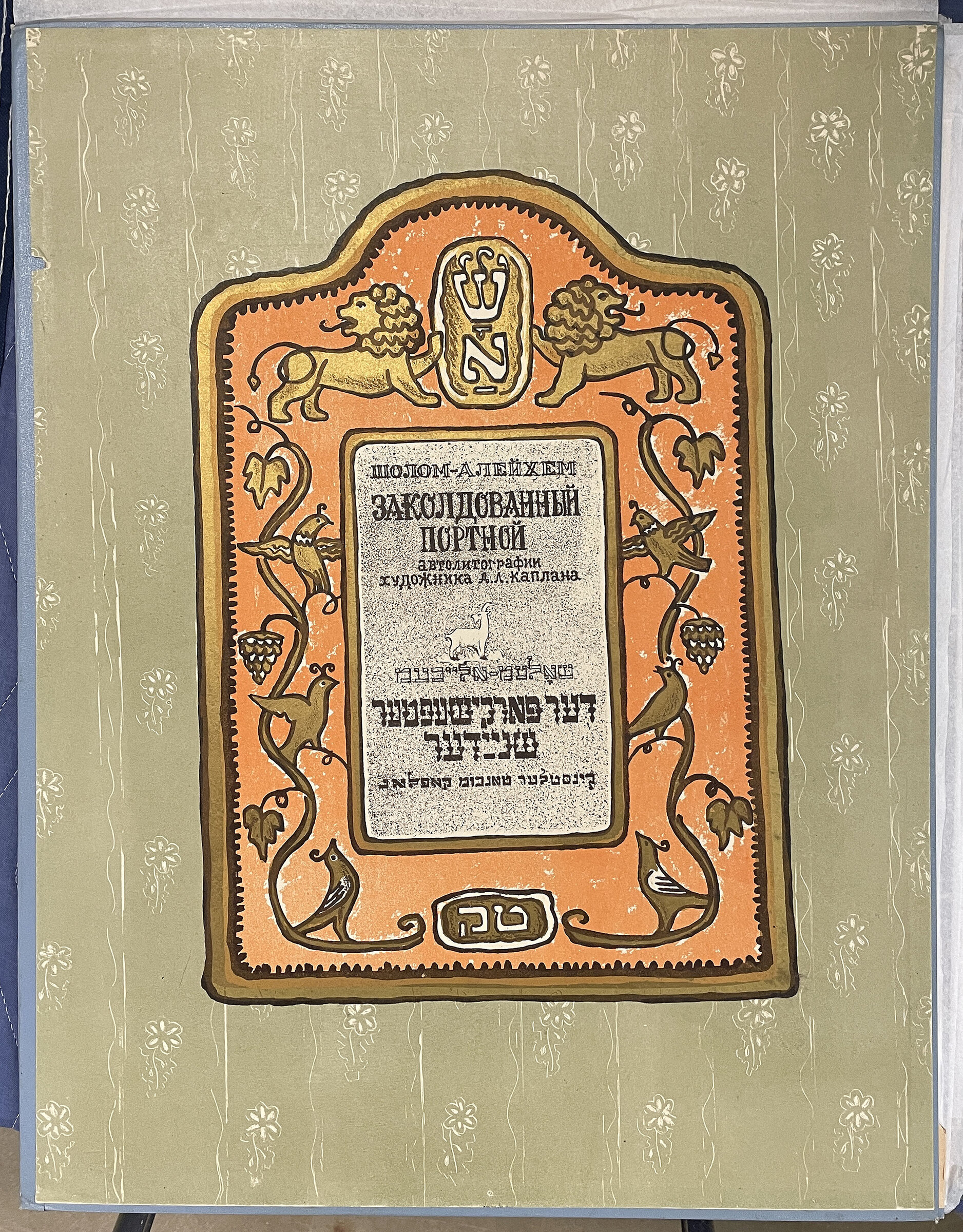
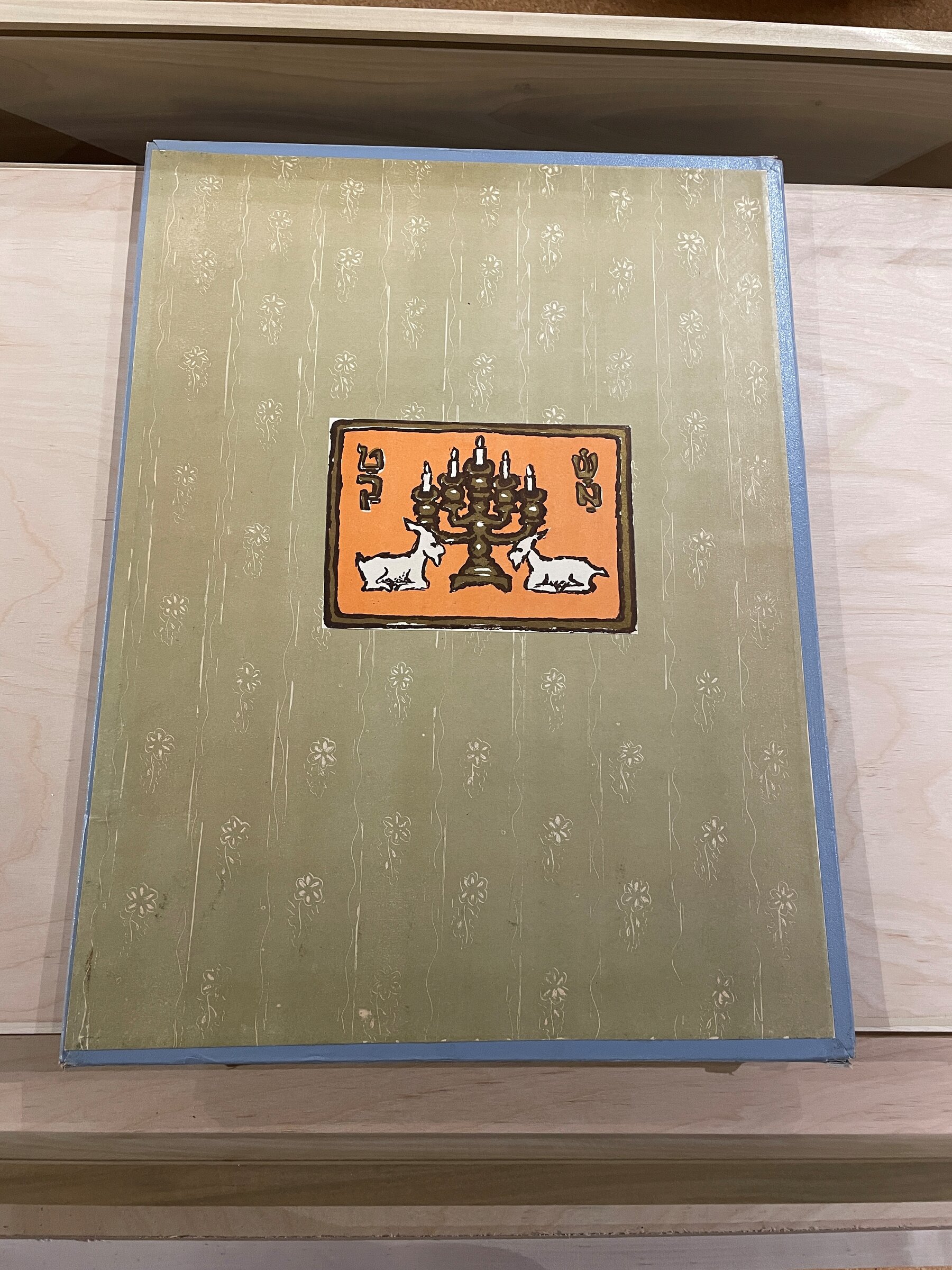
Anatoly Kaplan, cover sheet of The Enchanted Tailor portfolio, color lithograph, 1954–1957
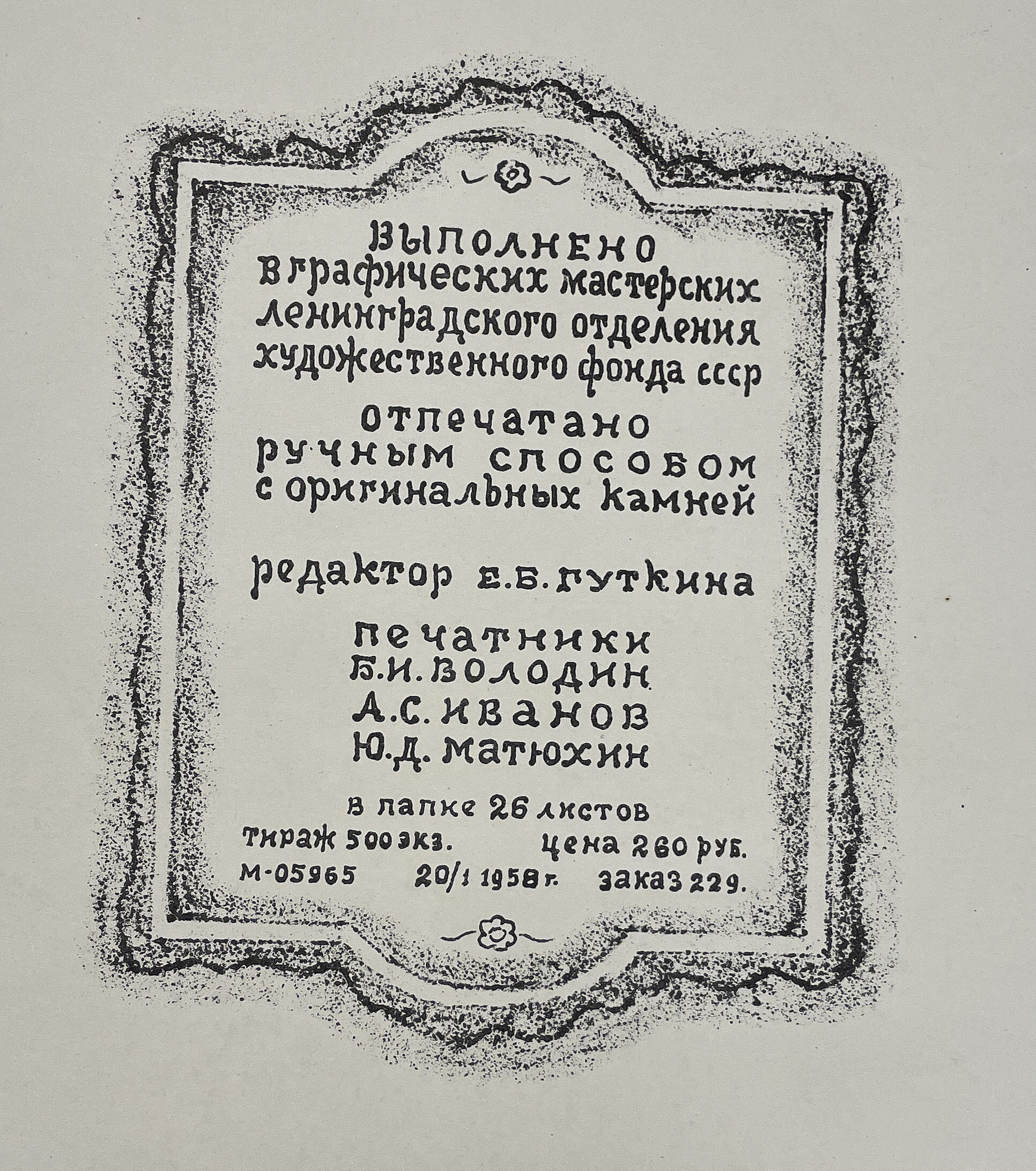
Anatoly Kaplan, title page of The Enchanted Tailor, color lithograph, 1954–1957
Anatoly Kaplan, cast of characters sheet from The Enchanted Tailor, color lithograph, 1954–1957
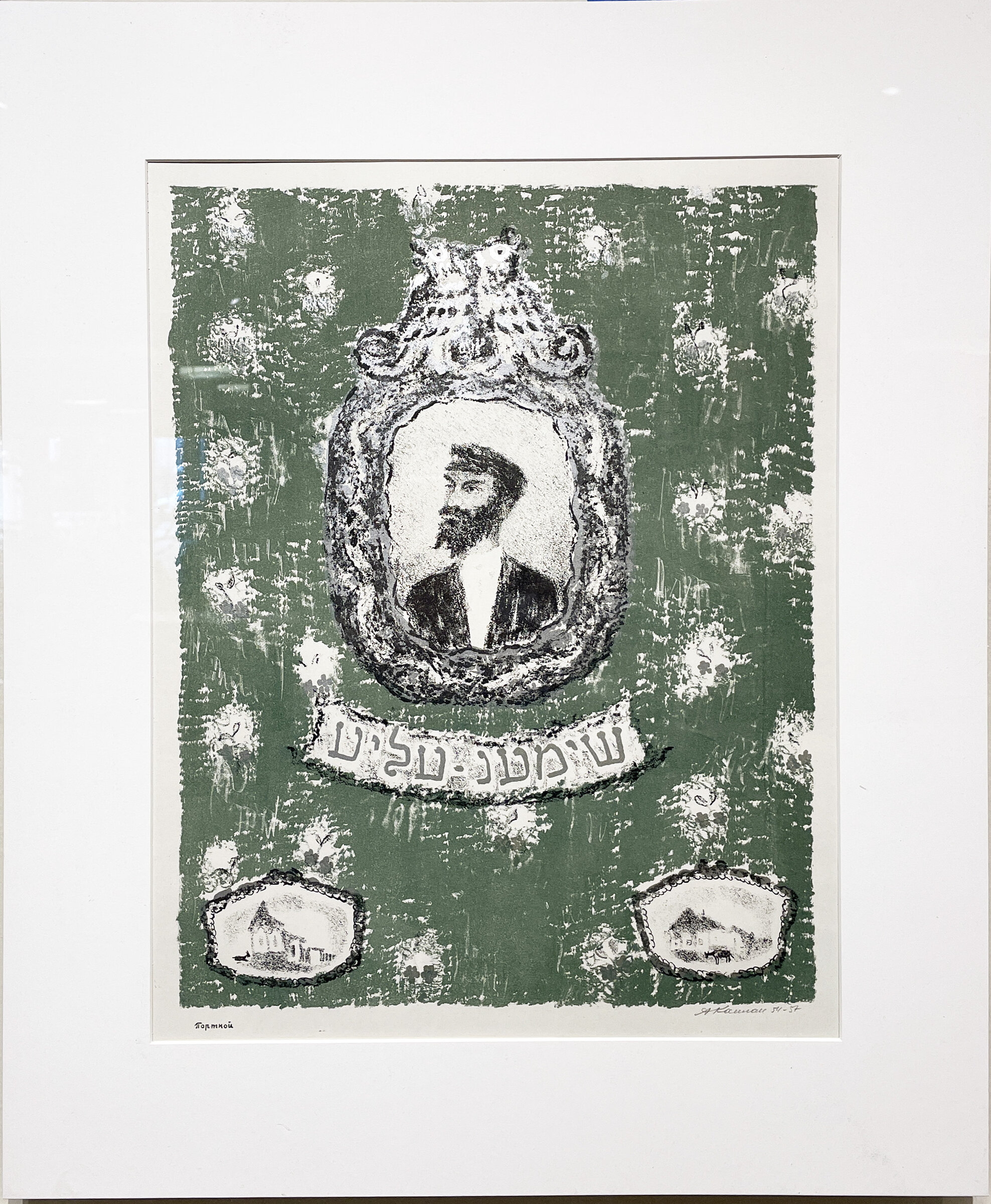
Anatoly Kaplan, portrait sheet from The Enchanted Tailor, color lithograph, 1954–1957
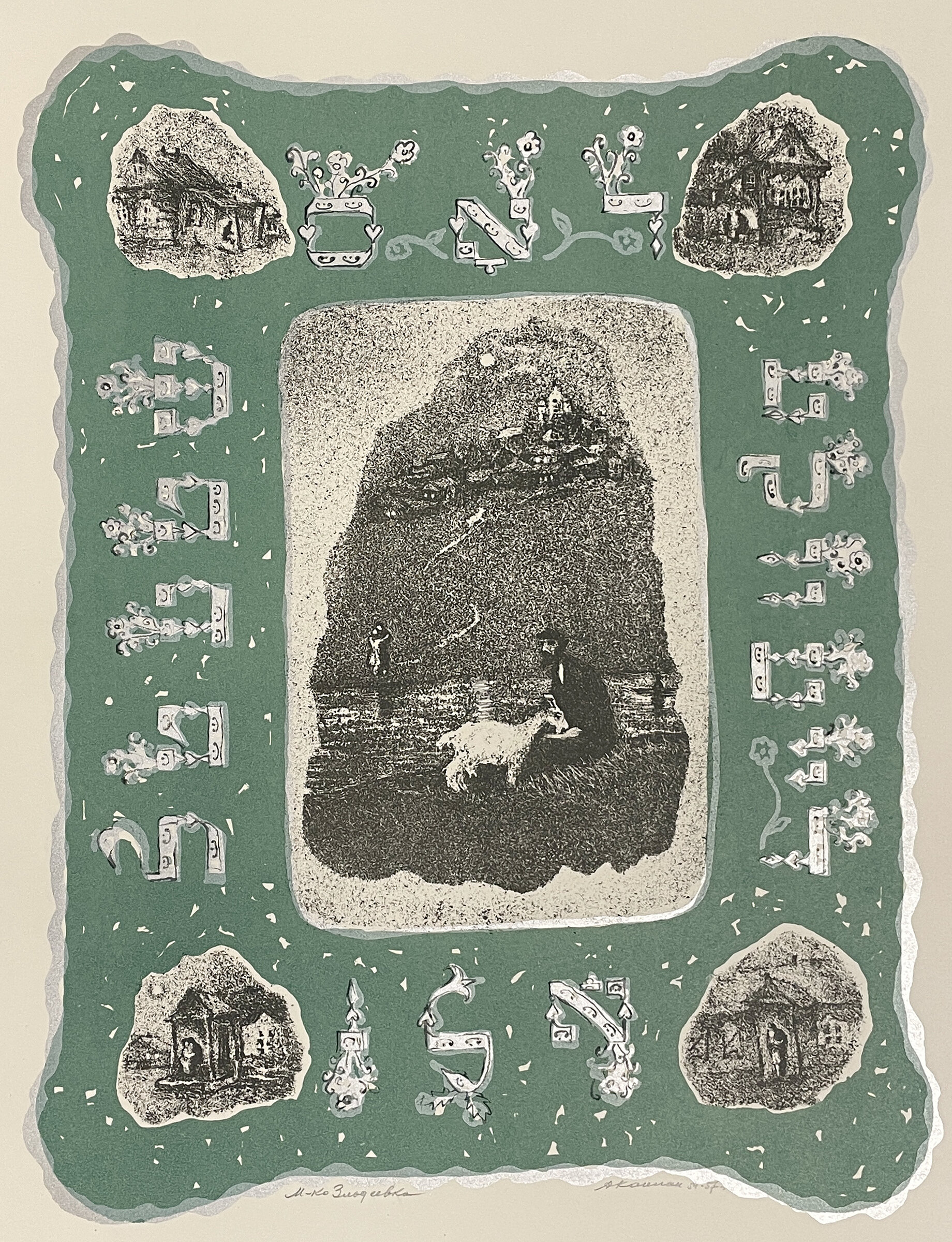
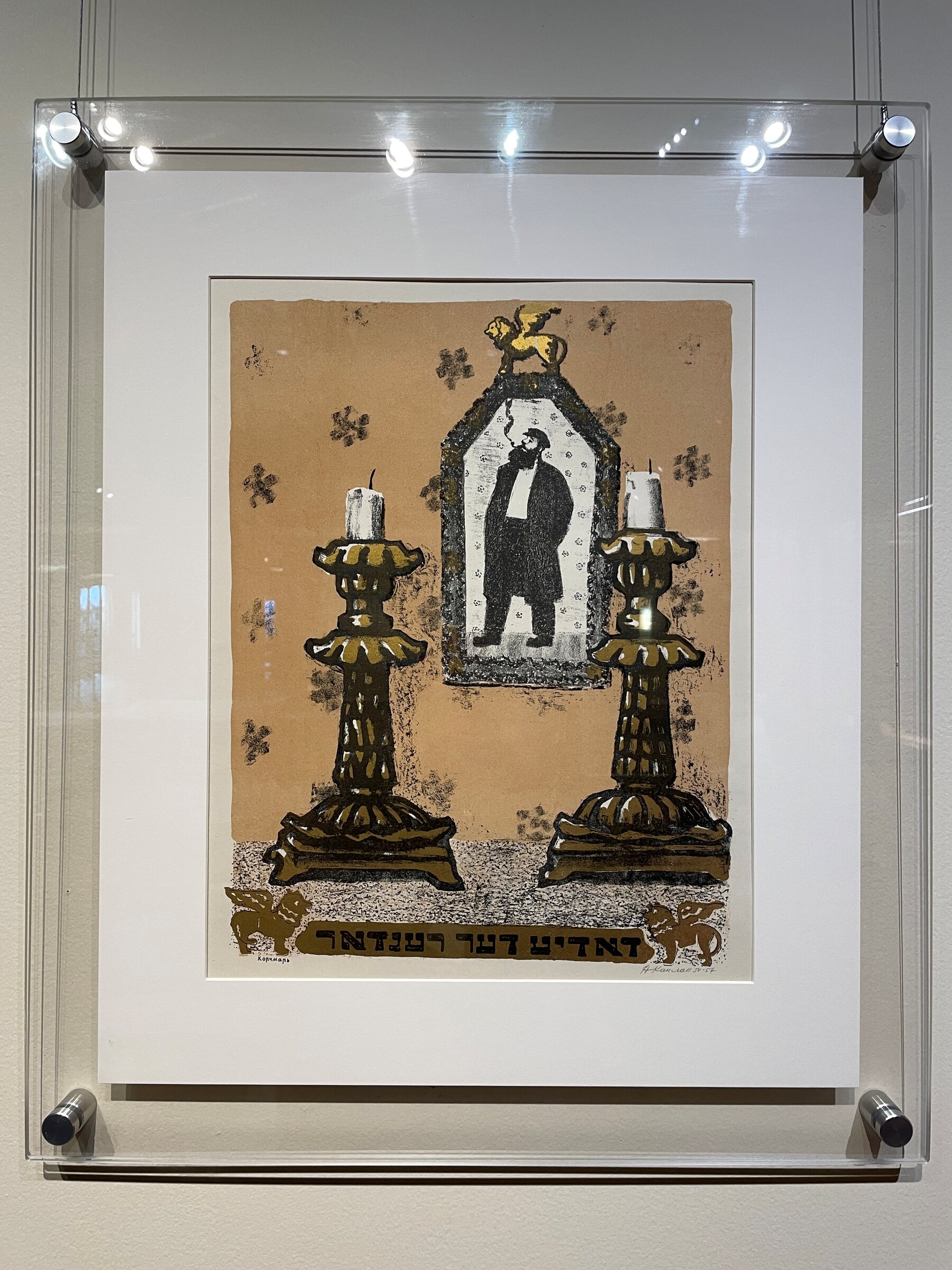
Anatoly Kaplan, sheet from The Enchanted Tailor, color lithograph, 1954–1957
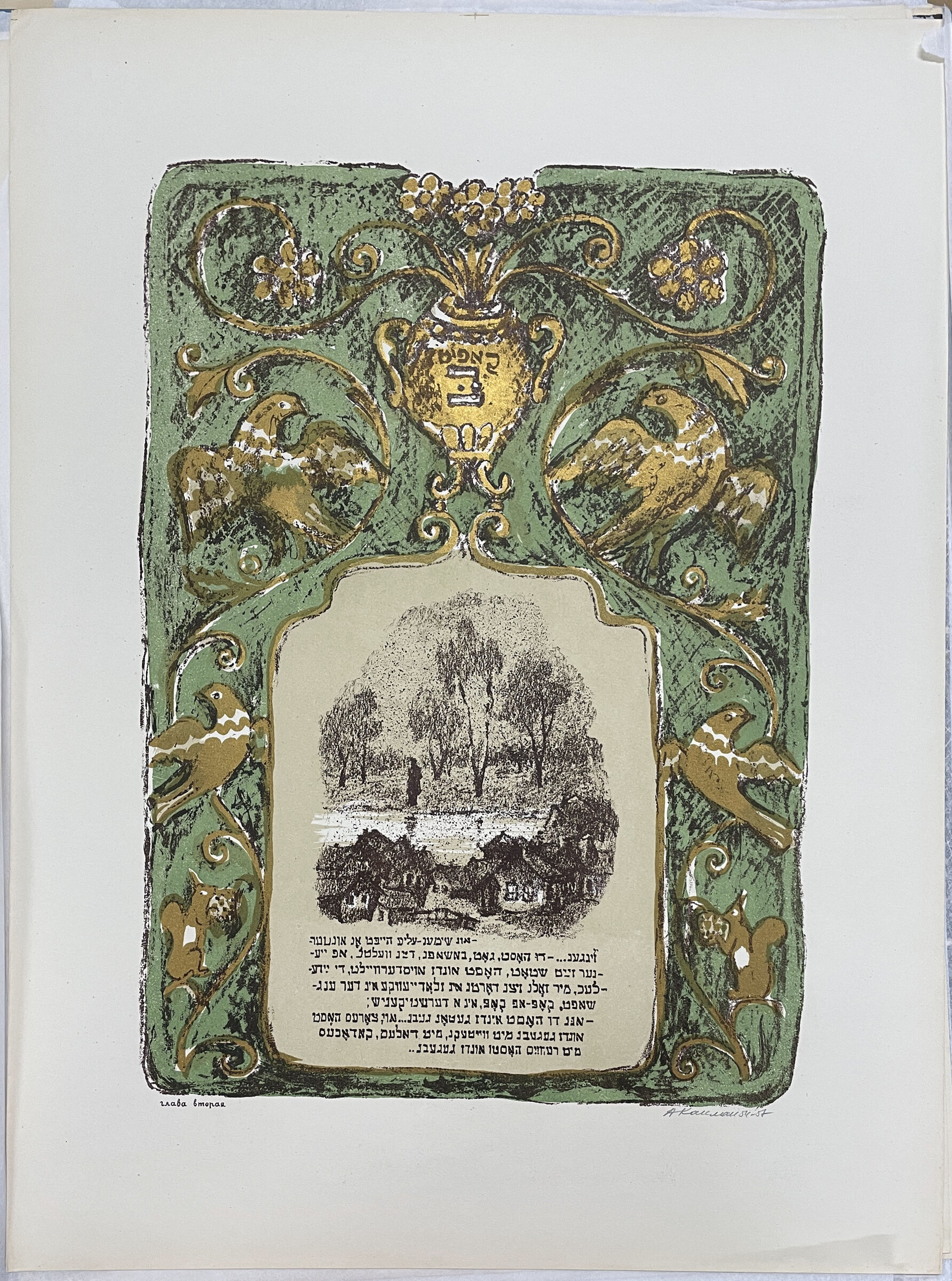
Anatoly Kaplan, the two villages of the story, sheet from The Enchanted Tailor, color lithograph, 1954–1957
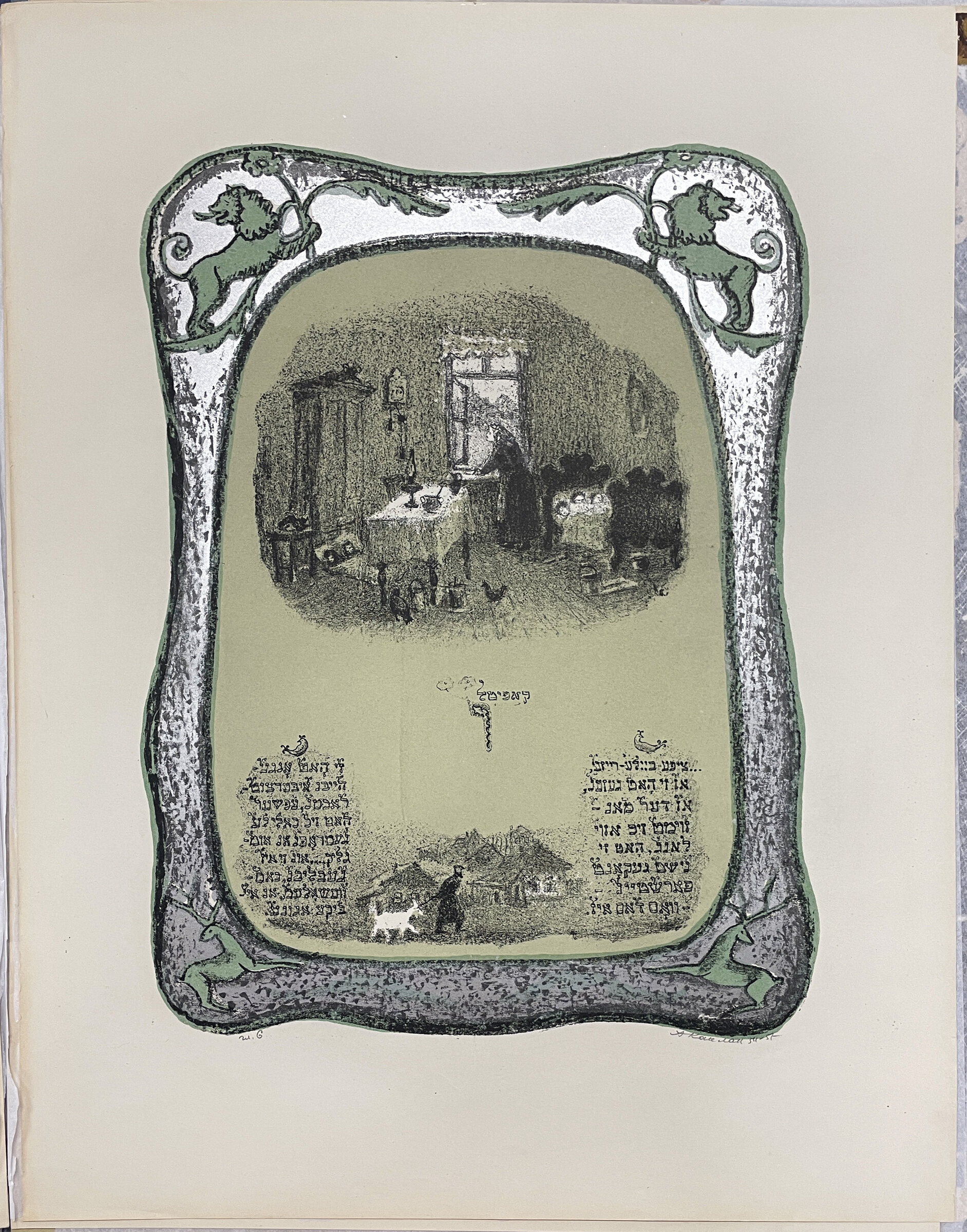
Anatoly Kaplan, sheet from The Enchanted Tailor, color lithograph, 1954–1957
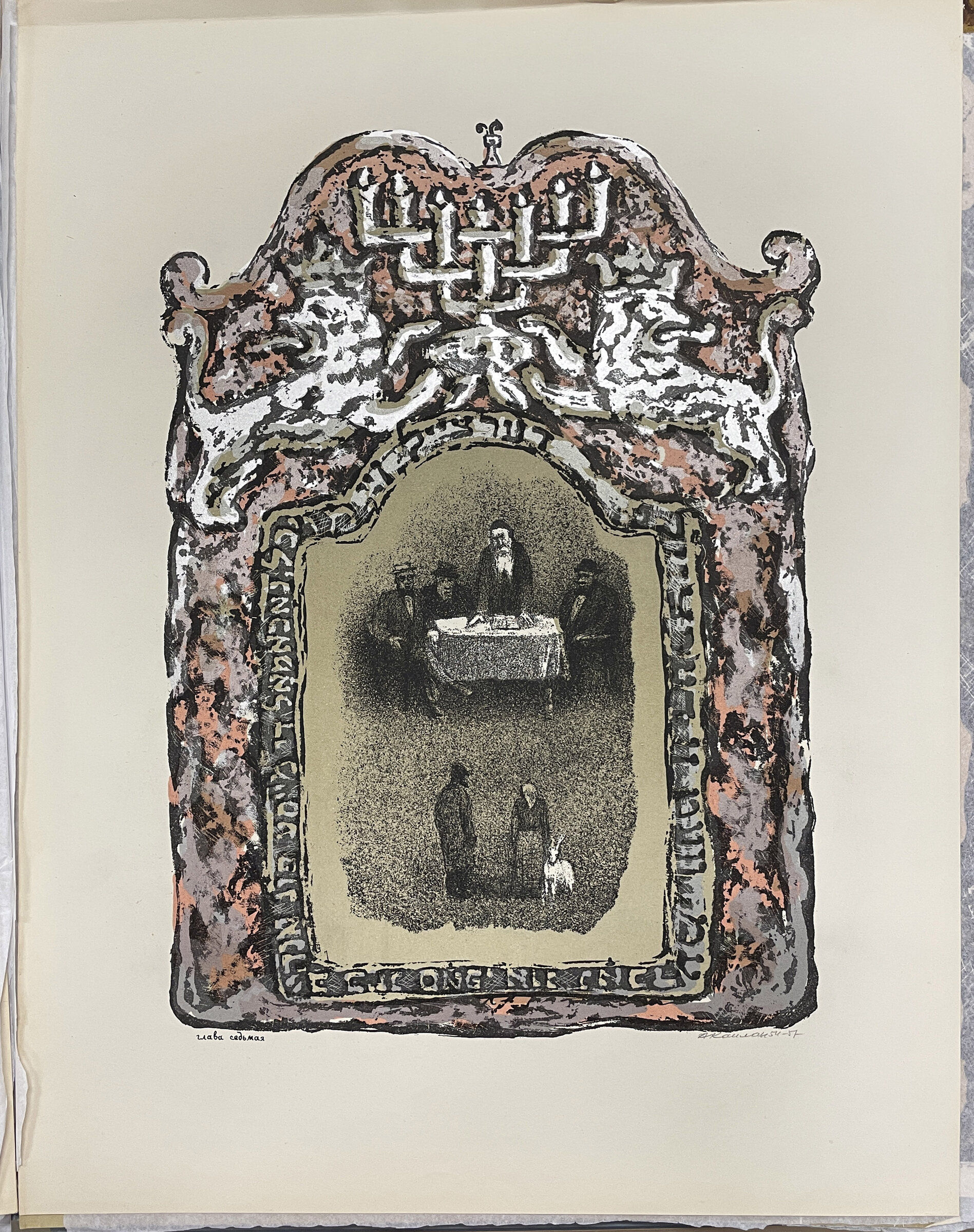
Anatoly Kaplan, sheet from The Enchanted Tailor, color lithograph, 1954–1957
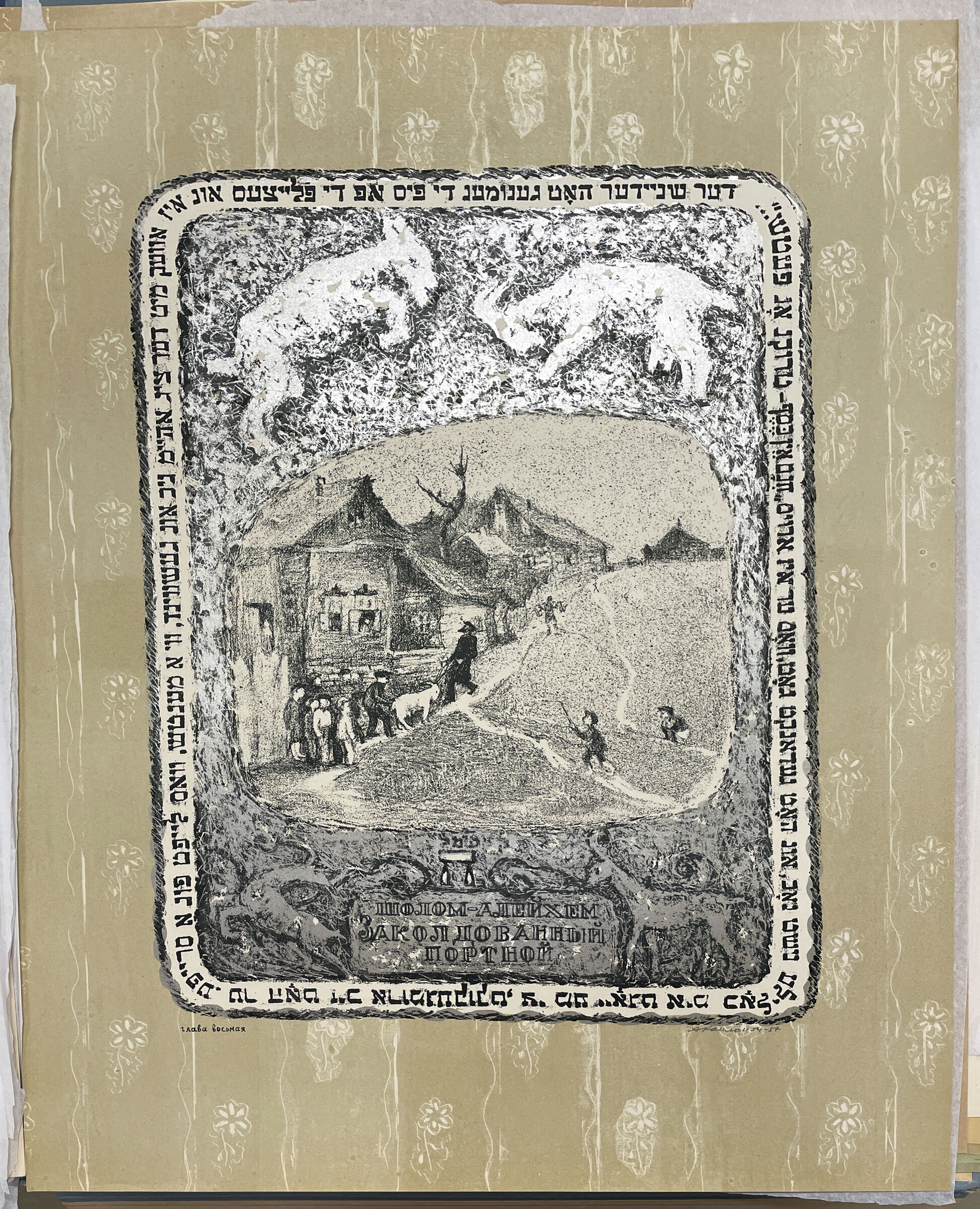
Anatoly Kaplan, sheet from The Enchanted Tailor, color lithograph, 1954–1957
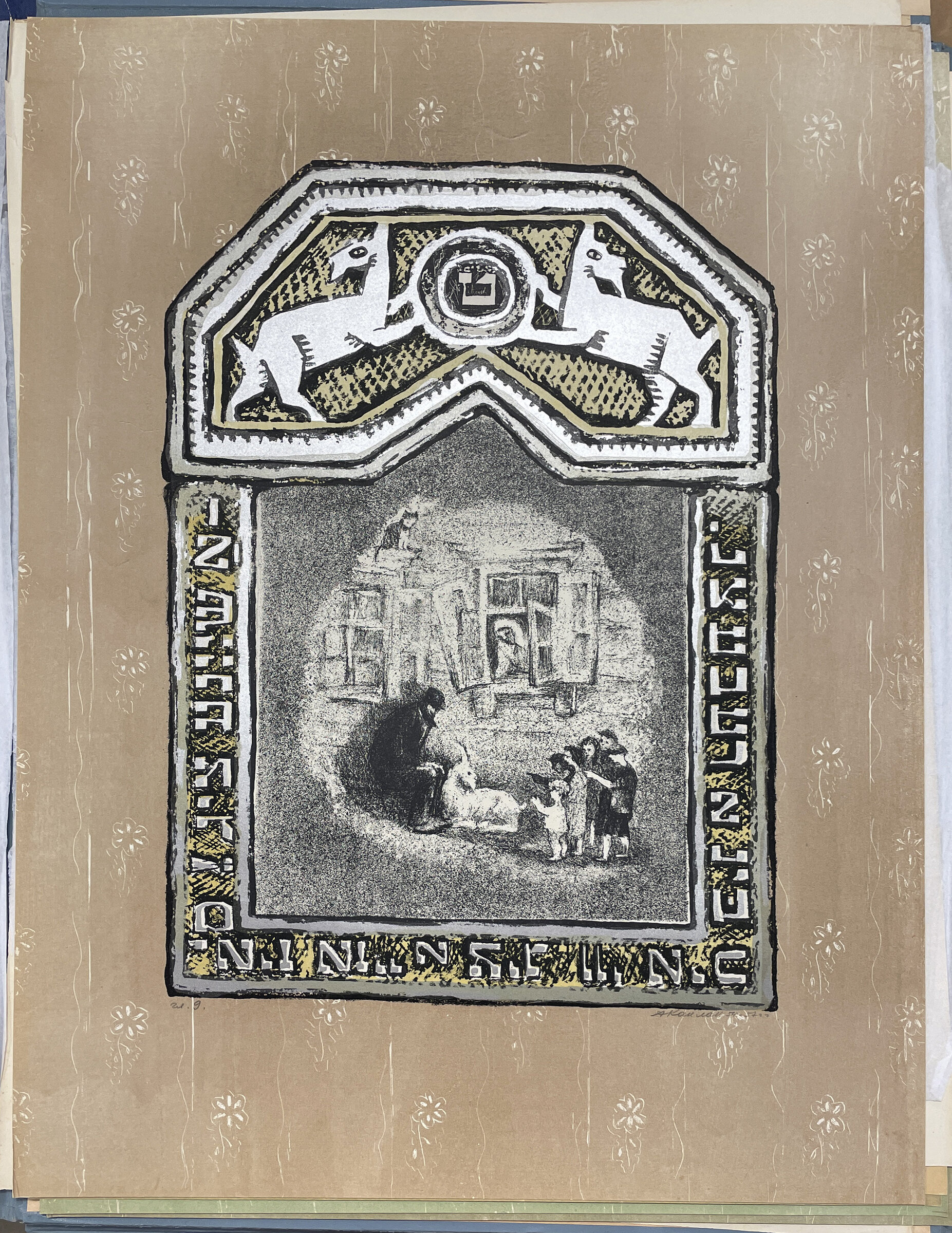
Anatoly Kaplan, sheet from The Enchanted Tailor, color lithograph, 1954–1957
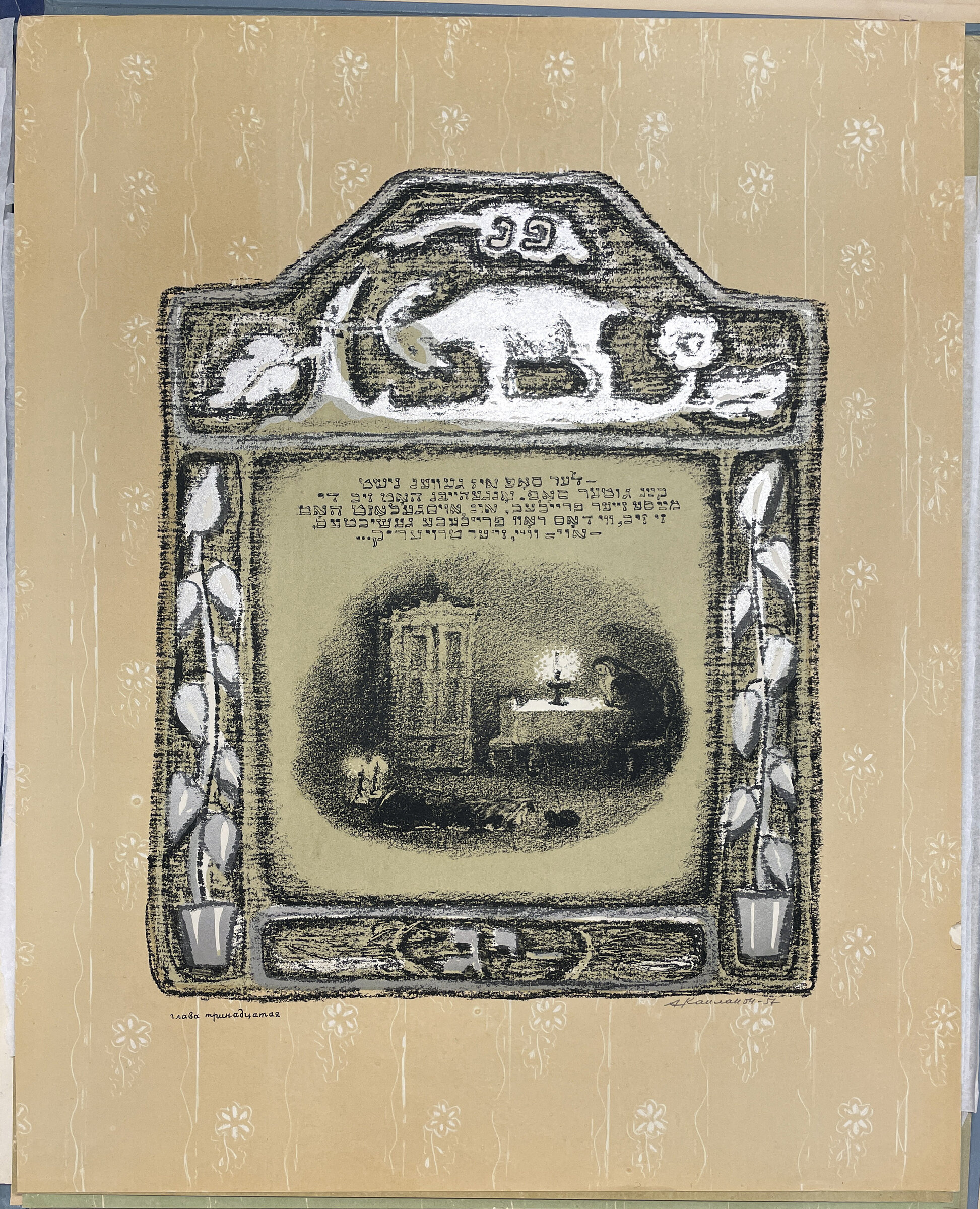
Anatoly Kaplan, sheet from The Enchanted Tailor, color lithograph, 1954–1957
Anatoly Kaplan, sheet from The Enchanted Tailor, color lithograph, 1954–1957
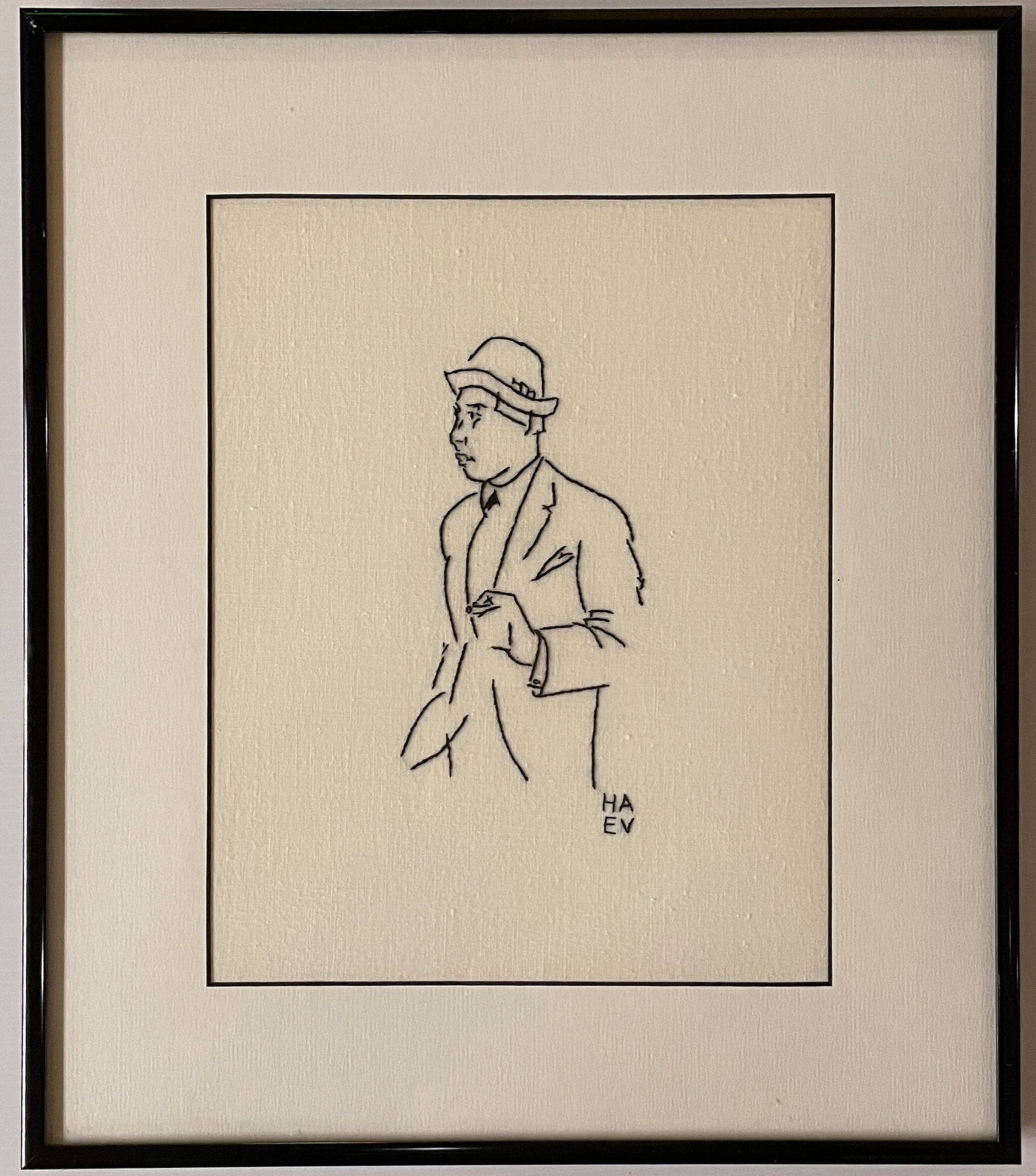
Eugenia Vainberg, Nathan Altman, Self-Portrait, embroidery after a drawing by Nathan Altman; hand embroidery, cotton on linen
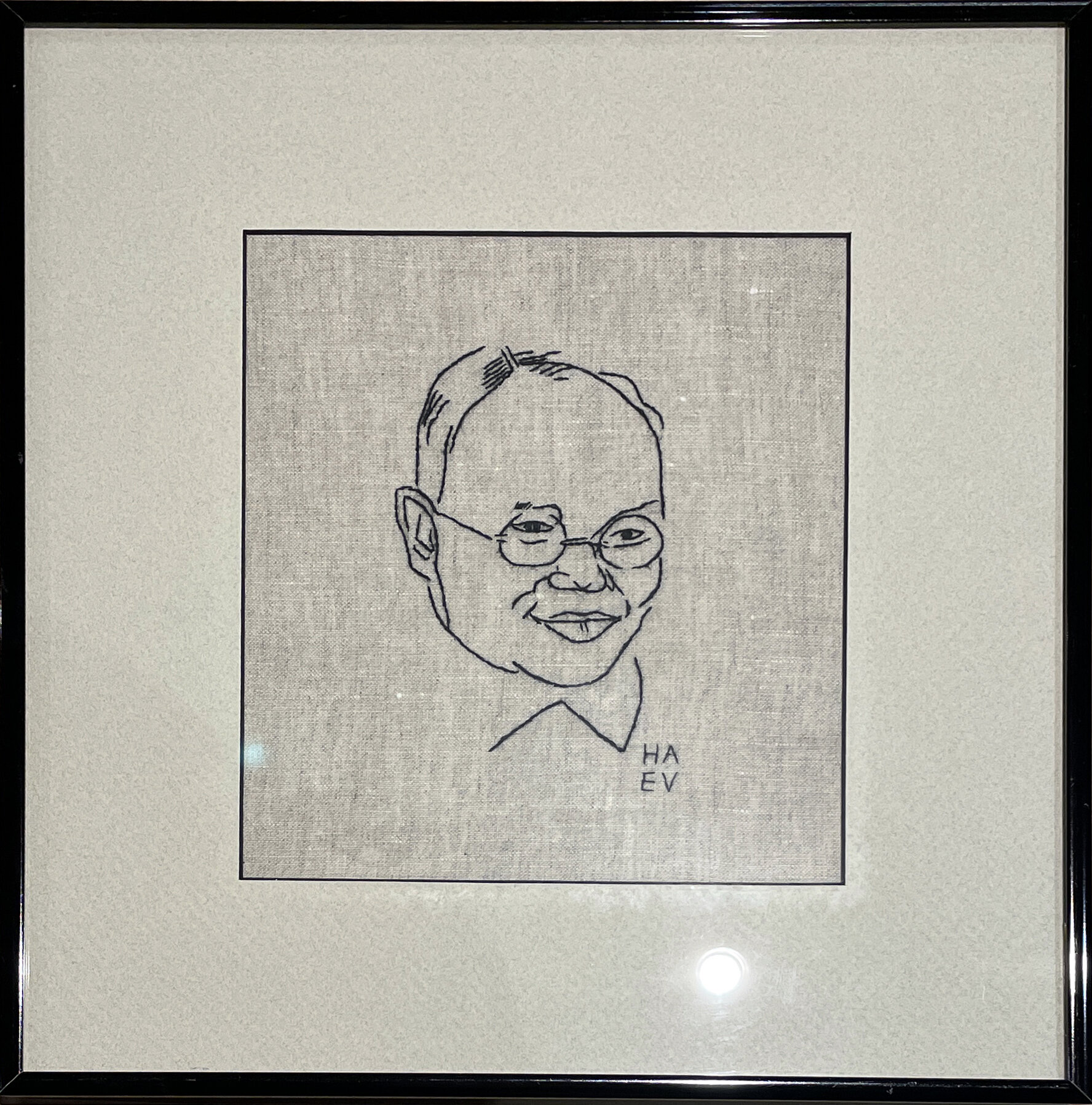
Eugenia Vainberg, Isaak Babel, embroidery after a drawing by Nathan Altman; hand embroidery, cotton on linen
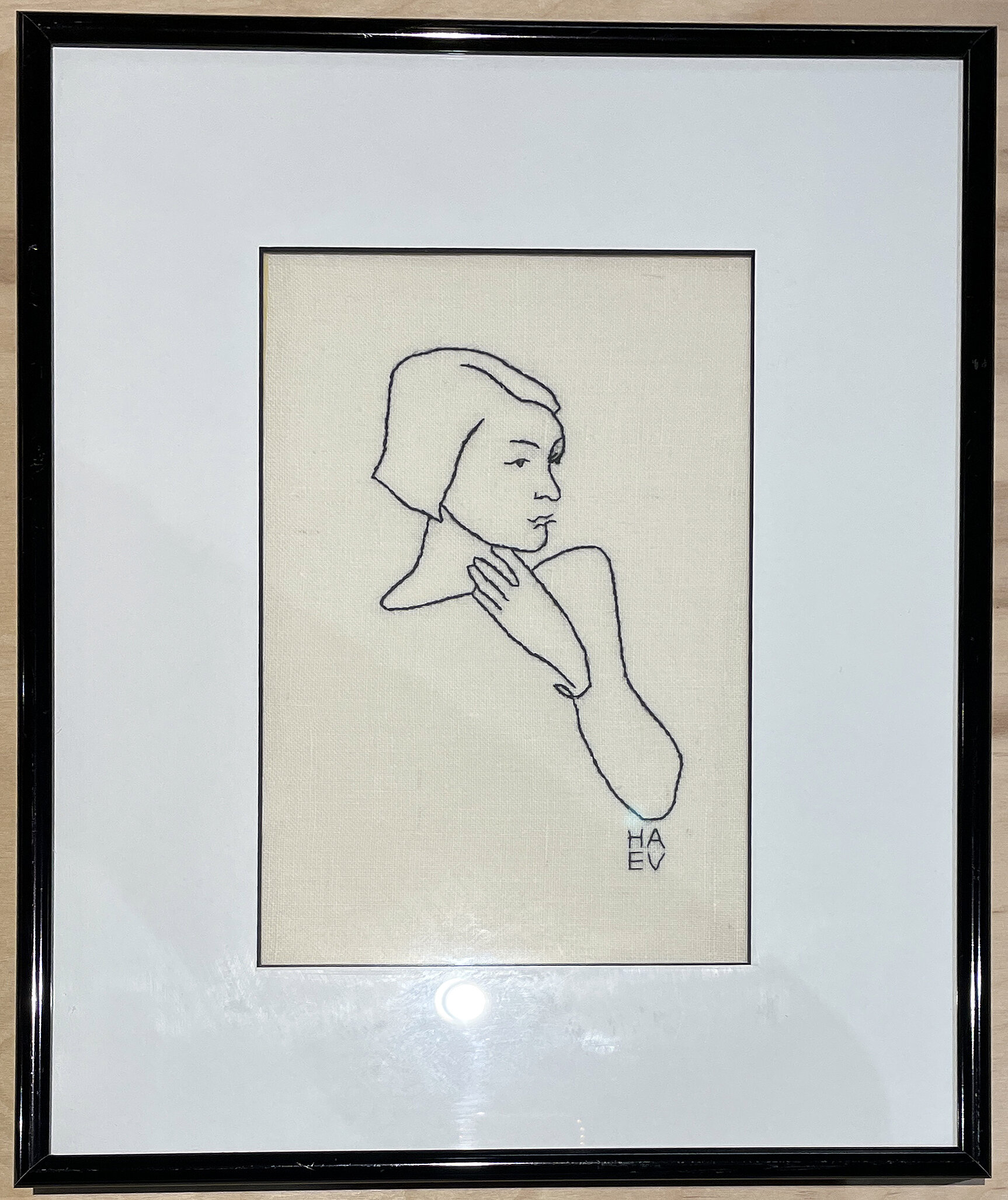
Eugenia Vainberg, Olga Bergholz, embroidery after a drawing by Nathan Altman; hand embroidery, cotton on linen
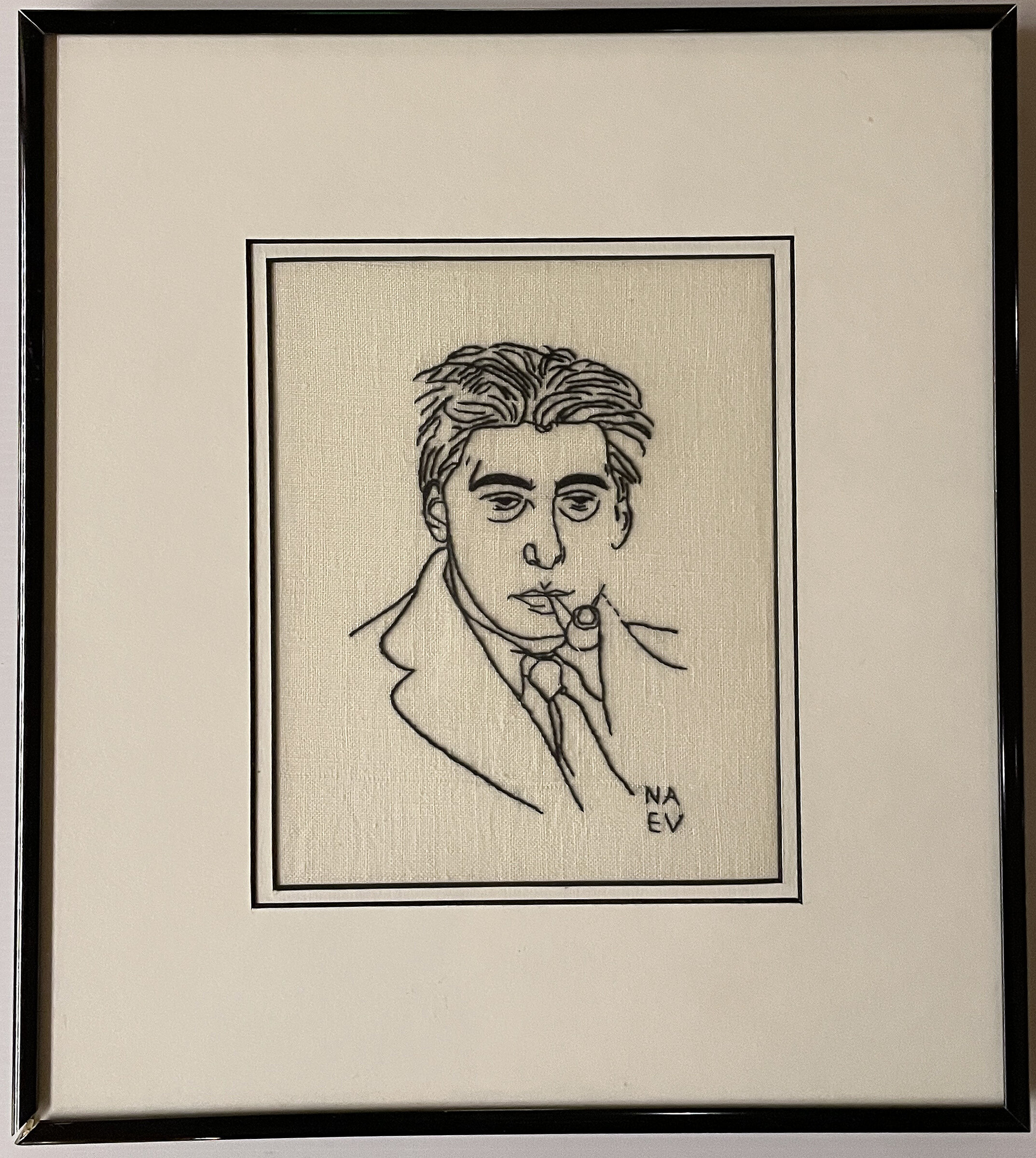
Eugenia Vainberg, Ilya Ehrenburg, embroidery after a drawing by Nathan Altman; hand embroidery, cotton on linen
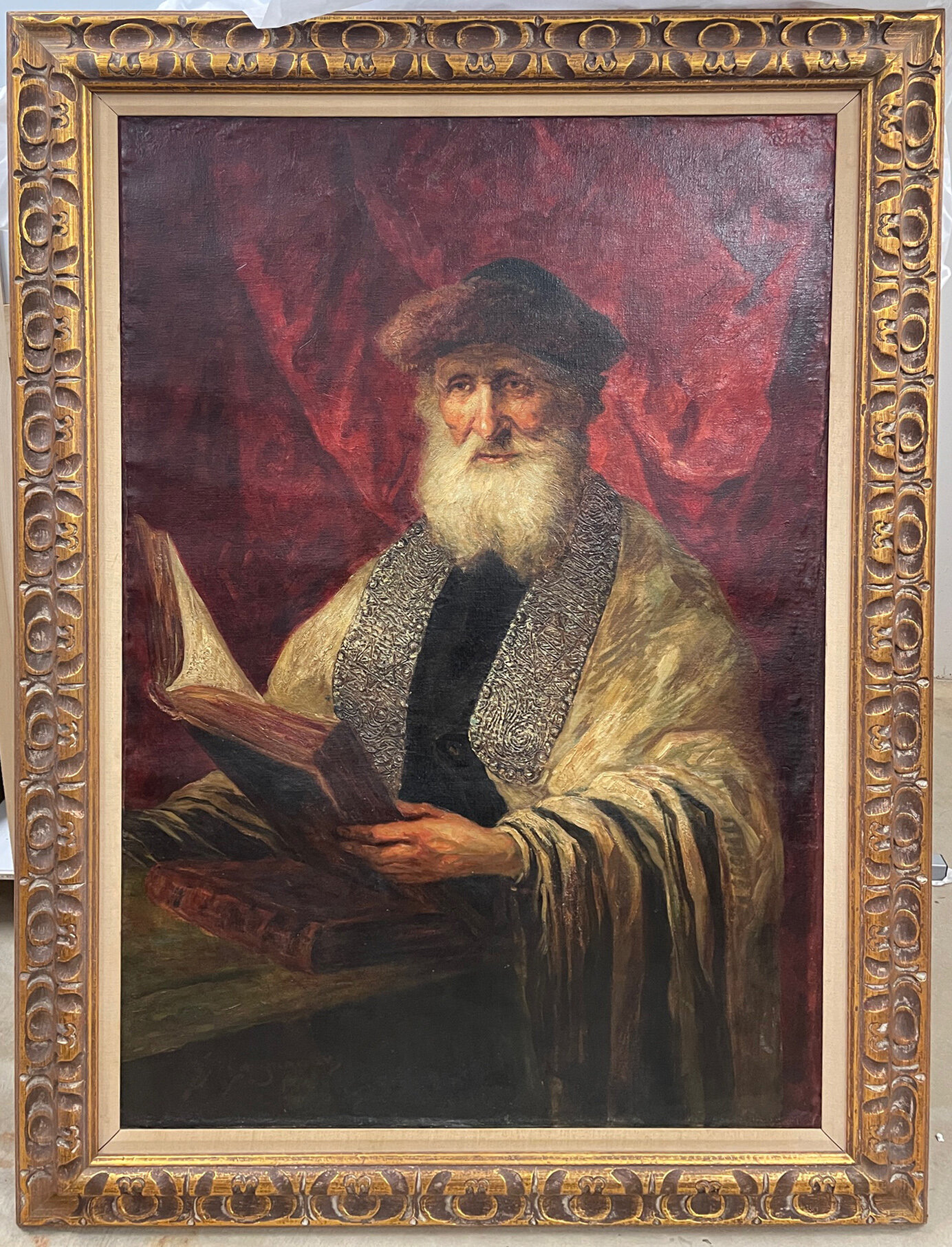
Schachmanov, Portrait of a Rabbi, late 19th century, Russian Empire; oil on canvas
“Anatoly Kaplan. The Enchanted Tailor: Sholem Aleichem in Soviet Graphic Art”
April – October 2026, Congregation Mishkan Or Museum, Beachwood, OH
Anatoly Kaplan
Tankhum ben Leyvick · טנחום בן לייביק
1902, Rogachov · 1980, Leningrad (Saint Petersburg)
Kaplan was not working to order, and his lithographs were not mere illustrations. He used them to retell the stories in a different medium for a new generation with no linguistic access to the originals.
Ruth R. Wisse, “Sholem Aleichem and Anatoly Kaplan,” published in Anatoly Kaplan: The Enchanted Artist, Beit Avi Chai, Jerusalem, 2023
Anatoly Kaplan was born in Rogachov, a small Jewish town in the Russian Empire (now Belarus), into a community whose culture, language, and way of life would largely be destroyed within his own lifetime. He studied art in Leningrad, becoming part of a whole school of Jewish artists who came of age in the 1920s and early 1930s, when Jewish culture was still officially permitted in the Soviet state. Bound to their childhood experience of the shtetl, they witnessed its annihilation in World War II and kept working as Jewish artists long after that position had become dangerous. Among them: Alexander Tyshler, Meer Axelrod, Mendl Gorshman, and Grigory Inger.
When Germany invaded the Soviet Union in 1941, Leningrad was subjected to a nearly 900-day siege — one of the longest and deadliest in modern history. Kaplan and his family were evacuated to the Urals in 1942, while his parents and relatives were murdered in the Rogachov ghetto. Upon returning in 1944, he created Landscapes of Leningrad during the Days of the Blockade — a lithograph series depicting the city’s post-war revival that was purchased by eighteen state galleries, becoming iconic in Soviet art.
An unlikely figure to gain official recognition in the Soviet Union, Kaplan became the one artist the Soviet state tolerated as a representative of Jewish culture. That tolerance had its limits: his albums were restricted, reviews turned hostile and works circulated more freely outside the USSR than within it. The artist remained in Leningrad until his death in 1980 and lived much of his life in a communal apartment, receiving only a fraction of what his sold works earned. He was never permitted to travel abroad, even as his art was collected by major museums across Europe and the United States.
Kaplan’s art draws on modern Jewish experience — from synagogue art to the collective farm, from ancient ornamental forms to the twentieth-century avant-garde. An extraordinary master of lithography, etching, ceramics, and painting, as an artist Kaplan became a profound reader and interpreter of Yiddish literature. His illustrated series for the works of Sholem Aleichem, Mendele Moykher Sforim, and Isaac Leib Peretz are not illustrations in a conventional sense. They are parallel works: visual responses that inhabit the same emotional world as the texts and that speak to viewers who may never have had access to the originals.
Kaplan encoded Jewish memory into every medium he touched. He drew on the ornamental language of Jewish folk art and carved gravestones. He worked Hebrew lettering into his compositions as a living element. He depicted the shtetl not as an object of nostalgia but as testimony — bearing witness to a culture that Soviet censors sought to suppress and that the Holocaust had devastated.
In Yiddish, the word farteytsh means to translate — literally, to render the sacred Hebrew language into the everyday Yiddish. Kaplan spent his life doing exactly that: translating a sacred vanished world into images that could still be seen, and felt today, by anyone willing to look.
The panel text is adapted from The Gift of Reading: On the 100th Anniversary of the Birth of Artist A.L. Kaplan by Valery Dymshits, 2003
Major Works
The Enchanted Tailor — color lithographs, 1954–1957 · Tevye the Dairyman — three lithograph series, 1957–1966 · Song of Songs — lithographs, 1962 · Stempenyu — lithographs, 1963–1967 · Chad Gadya — color lithographs, 1957–1961 · Fishke the Lame — lithographs, 1966–1969 · Fishke the Lame — drypoint etchings, 1976 · Gogol Series — ceramic sculpture, 1977–1979
The Enchanted Tailor
Der Farkishefter Shnayder · דער פארקישעפטער שניידער
Sholem Aleichem, 1900 · Lithographs by Anatoly Kaplan, 1954–1957
In ‘The Enchanted Tailor,’ as in his other works, Kaplan emerges as a direct heir to the traditions of the avant-garde, but for him formal devices are not an end in themselves, but a means.
Valery Dymshits, “The Gift of Reading,” 2003
The Enchanted Tailor follows Shimen-Eli Shma-Koleinu, a hapless village tailor sent to a neighboring village to buy a goat. A simple errand spirals into a chain of misunderstandings, bad luck, and comic humiliation. The goat at the center of the story seems bewitched: she gives milk at the neighbor’s house but refuses at Shimen-Eli’s, driving him to obsession and, eventually, madness and death.
Shimen-Eli’s nickname is not incidental. Shma Koleinu (Hebrew for “Hear Our Voice”) is one of the central supplications of the Jewish High Holiday and fast day liturgy, a plea addressed to God for mercy and attention. The nickname belongs to a man whose personal supplication seems to go unheard in the framework of the story, but the reader hears it clearly for Shimen-Eli and the rest of the collective “them” — those who cry and lose their minds in Yiddish.
The story connects to a long tradition of Jewish magical tales, in which the boundary between the natural and the supernatural is unstable. The dibbuk, a stubborn restless spirit that attaches itself to a living person or object, often appears in such stories. The goat in The Enchanted Tailor behaves inexplicably and perversely as though it is possessed, becoming impervious to reason or prayer. The writer transforms this uncanny material into comedy without dispelling the unease.
The story has been described as a proving ground on which Sholem Aleichem developed the narrative voice and comic timing that would later define Tevye the Dairyman. The two works share absurdist fatalism and a tenderness toward characters trapped in poverty and misfortune. Kaplan recognized this, and after completing the lithograph series for The Enchanted Tailor, he turned directly to Tevye.
Kaplan’s The Enchanted Tailor, created between 1954 and 1957, was the first major work of his mature career. The portfolio is structured as a visual script. It opens with a cast list and individual portraits of the main characters and includes the images of the two villages where the story unfolds, setting the stage before the drama begins. The staging continues as the artist draws freely on the ornamental vocabulary of Jewish folk art, including carved gravestones, embroidered textiles and painted interiors. Hebrew lettering appears as a living presence, woven into the composition. Each sheet is composed as a kind of collage with central illustrations — masterful, soft and ambient renderings of the story’s central episodes — surrounded by decorative borders and set against backgrounds styled as wallpaper. Just as the choice of wallpaper and decorative motifs creates an intimate staging of shtetl domestic life, so too the structure of the portfolio itself transforms the story into a visual theater.
In 1900 Sholem Aleichem worked to transcribe the world and the language that were disintegrating. Anatoly Kaplan in the 1950s created a ghostly memorial of that world and language, by then already gone. The artist was not illustrating in the conventional sense; rather he was reading: absorbing the emotional content and translating it into a parallel visual staging. The exhaustive claustrophobic wordiness of the story is sublimated into concise images, eerie and monumental at the same time, escaping the prison of text just like the goat escapes the absurd turmoil of the village, because “anything is better than such a life.” The Yiddish text is minimized to absolute necessity and woven into images. Similar to gravestone inscriptions, it appears as pure memory, as presences of silenced speech.
The panel text is partially adapted from The Gift of Reading: On the 100th Anniversary of the Birth of Artist A.L. Kaplan by Valery Dymshits, 2003
Around the Portfolio
The Enchanted Tailor is shown in the company of works that widen its world. Four embroidered portraits by Eugenia Vainberg (1928–2022), stitched after drawings by Nathan Altman — Kaplan’s contemporary and fellow heir to the Russian Jewish avant-garde — bring into the gallery the faces of a generation that made culture under impossible conditions: Isaak Babel, Olga Bergholz, Ilya Ehrenburg, and Altman himself. Lithographs from Chaim Gross’s Jewish Holidays portfolio and by Marc Chagall place Kaplan among artists formed by the same Yiddish-speaking world, who interiorized the shared visual language of synagogue art and carved gravestones in their youth and kept returning to it — each remembering that world in his own way, from Kaplan’s contained, coherent compositions to Gross’s vivid fragments caught in the act of surfacing. And a late nineteenth-century oil, Portrait of a Rabbi by Schachmanov, reaches back to the world all of them came from: the devotional portraiture of the Pale of Settlement, giving a face to the profound spirituality that Sholem Aleichem’s story tends to veil with humor and that Kaplan’s lithographs quietly restore.
Together, these works turn the exhibition from a display of a single portfolio into a conversation across generations and media — painting, print, and needle and thread — about how a destroyed world is remembered, translated, and carried forward.
The label texts draw on: Eugenia Vainberg, evainberg.com; Encyclopedia of Cleveland History, Case Western Reserve University; Seth L. Wolitz, “Al’tman, Natan Isaevich,” YIVO Encyclopedia of Jews in Eastern Europe; Pascale Samuel, “Nathan Altman: An Artist Between Two Worlds,” In geveb, 2024; Merrill C. Berman Collection, mcbcollection.com; Valery Dymshits, “The Gift of Reading: On the 100th Anniversary of the Birth of Artist A.L. Kaplan,” 2003; United States Holocaust Memorial Museum, “The Holocaust in the Soviet Union”; Ilya Ehrenburg and Vasily Grossman, The Black Book of Soviet Jewry (Yad Vashem, 1980); Yiddish Book Center, “The Night of the Murdered Poets” resource kit; Pauline Peretz, Let My People Go: The Transnational Politics of Soviet Jewish Emigration During the Cold War (Routledge, 2017).
Katya Oicherman, Curator