“Memory: Moshe Gershuni”
September 2025 – March 2026, Roe Green Gallery, Jewish Federation of Cleveland, and Hartzmark Gallery, Congregation Mishkan Or, Beachwood, OH
Curated by Matthew Garson and Katya Oicherman
Presented by Cleveland Israel Arts Connection and Mishkan Or Museum
Ed Carroll, “Love and Grief, Faith and Flesh: The Art of Moshe Gershuni”, Canvas CLE, Dec 29, 2025
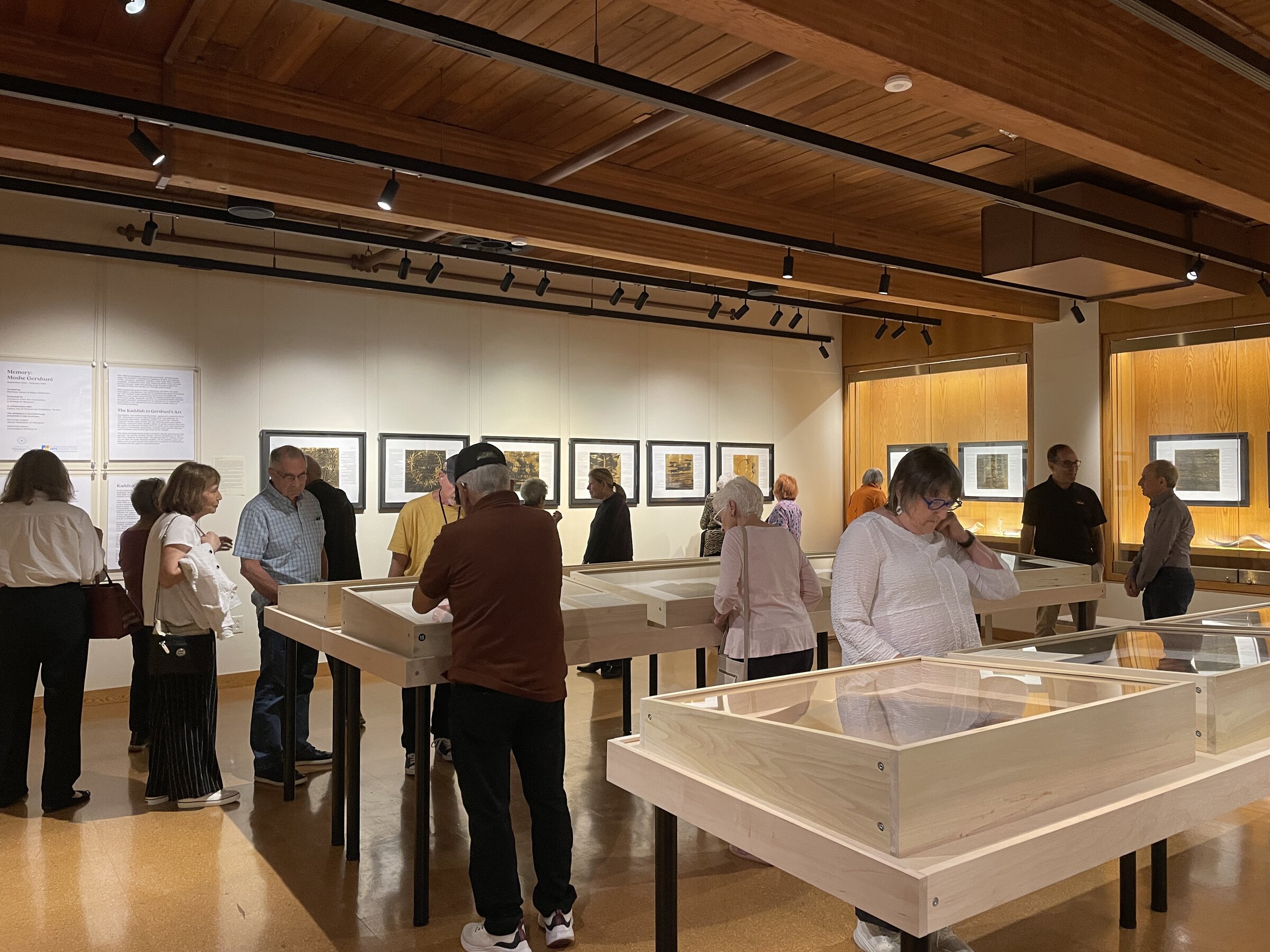
Opening reception
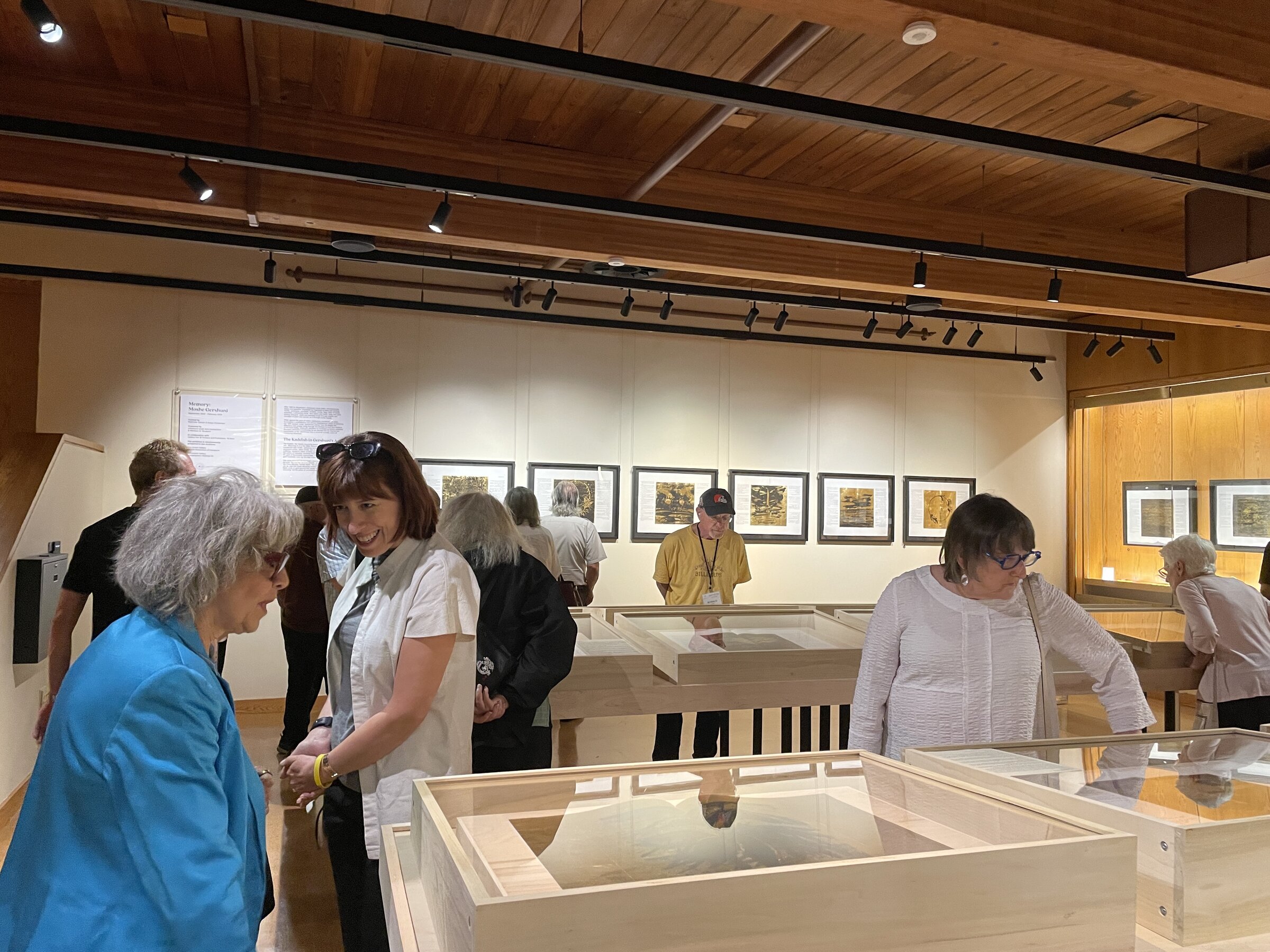
Opening reception
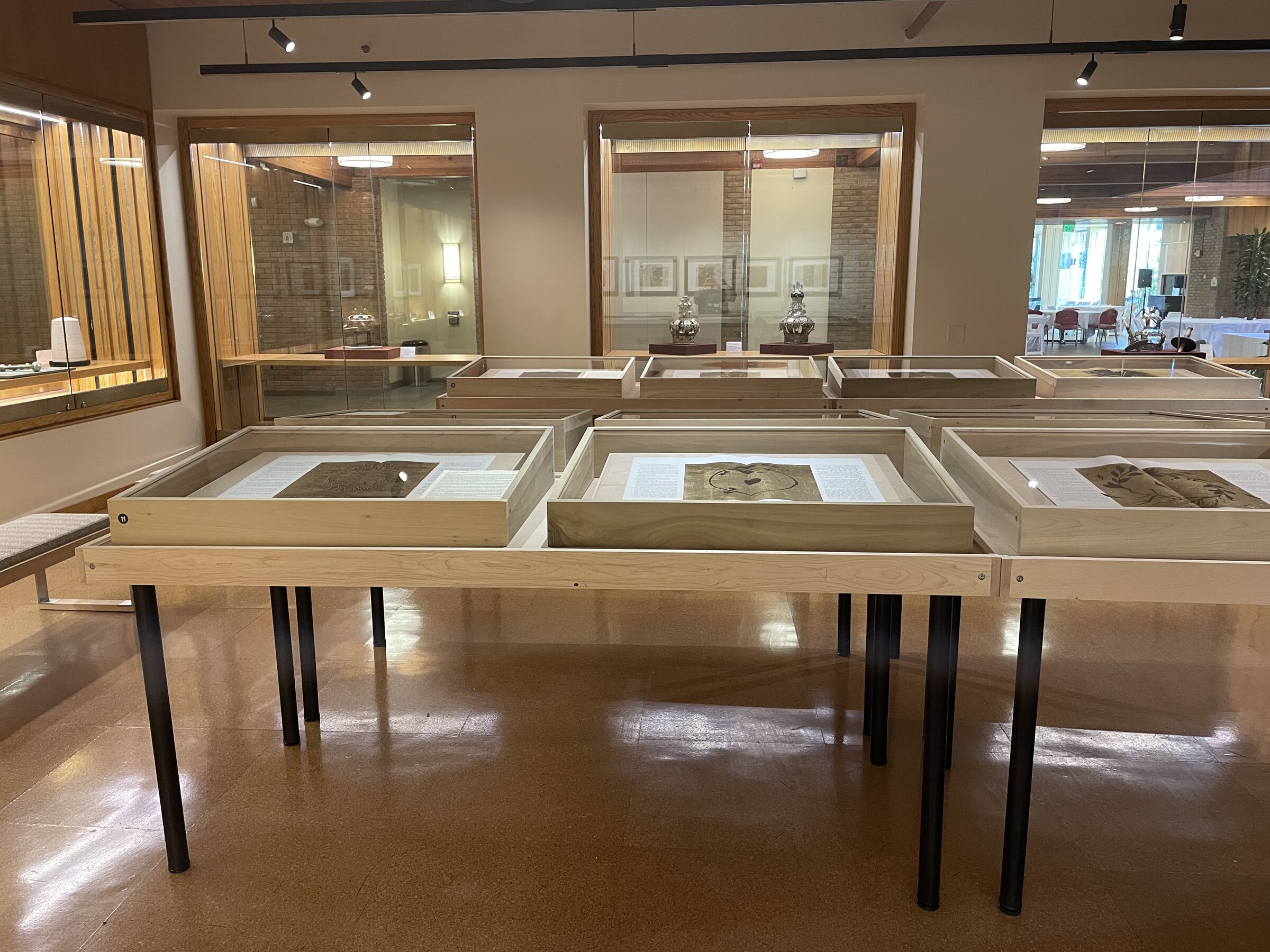
Exhibition view
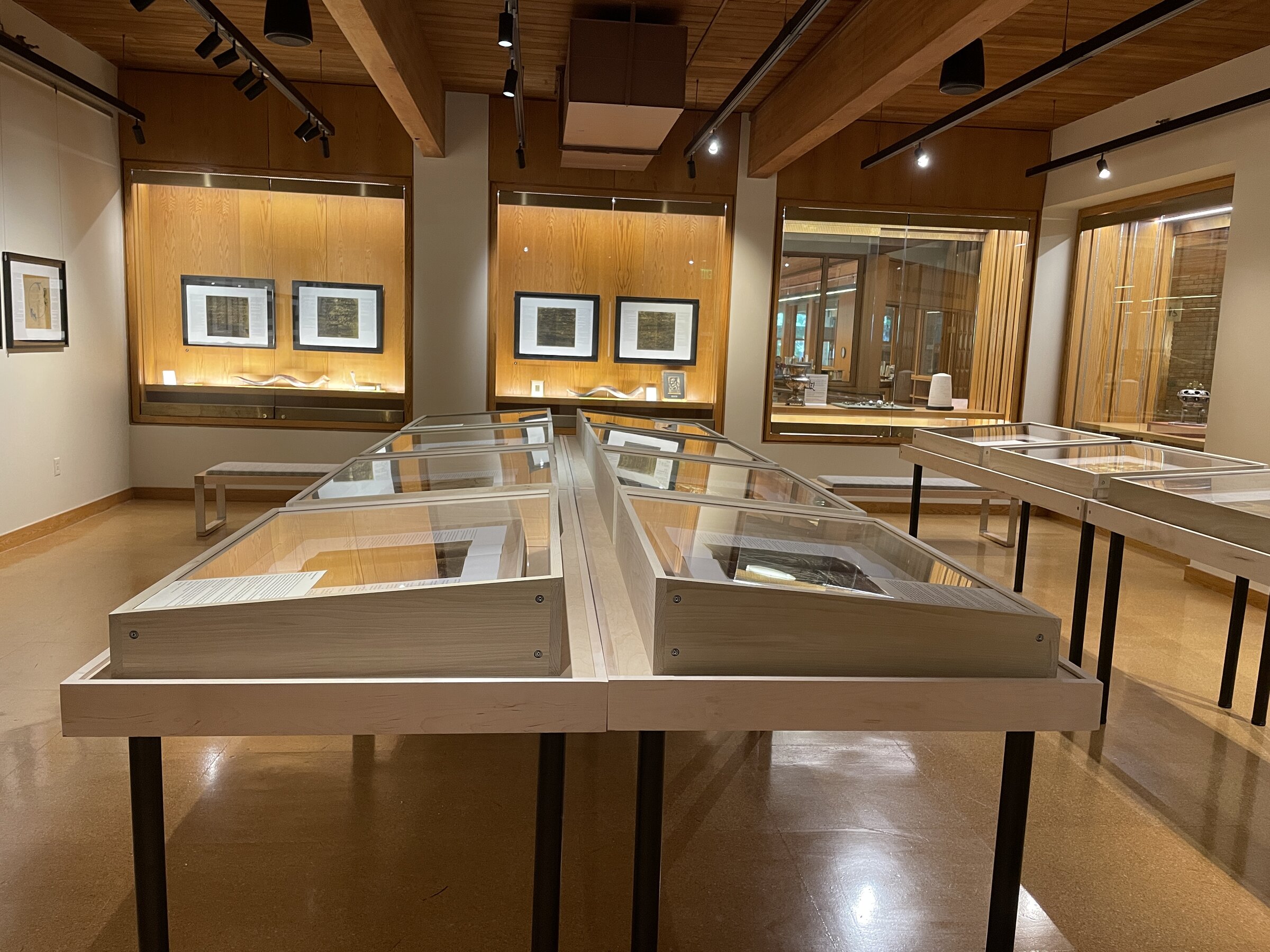
Exhibition view
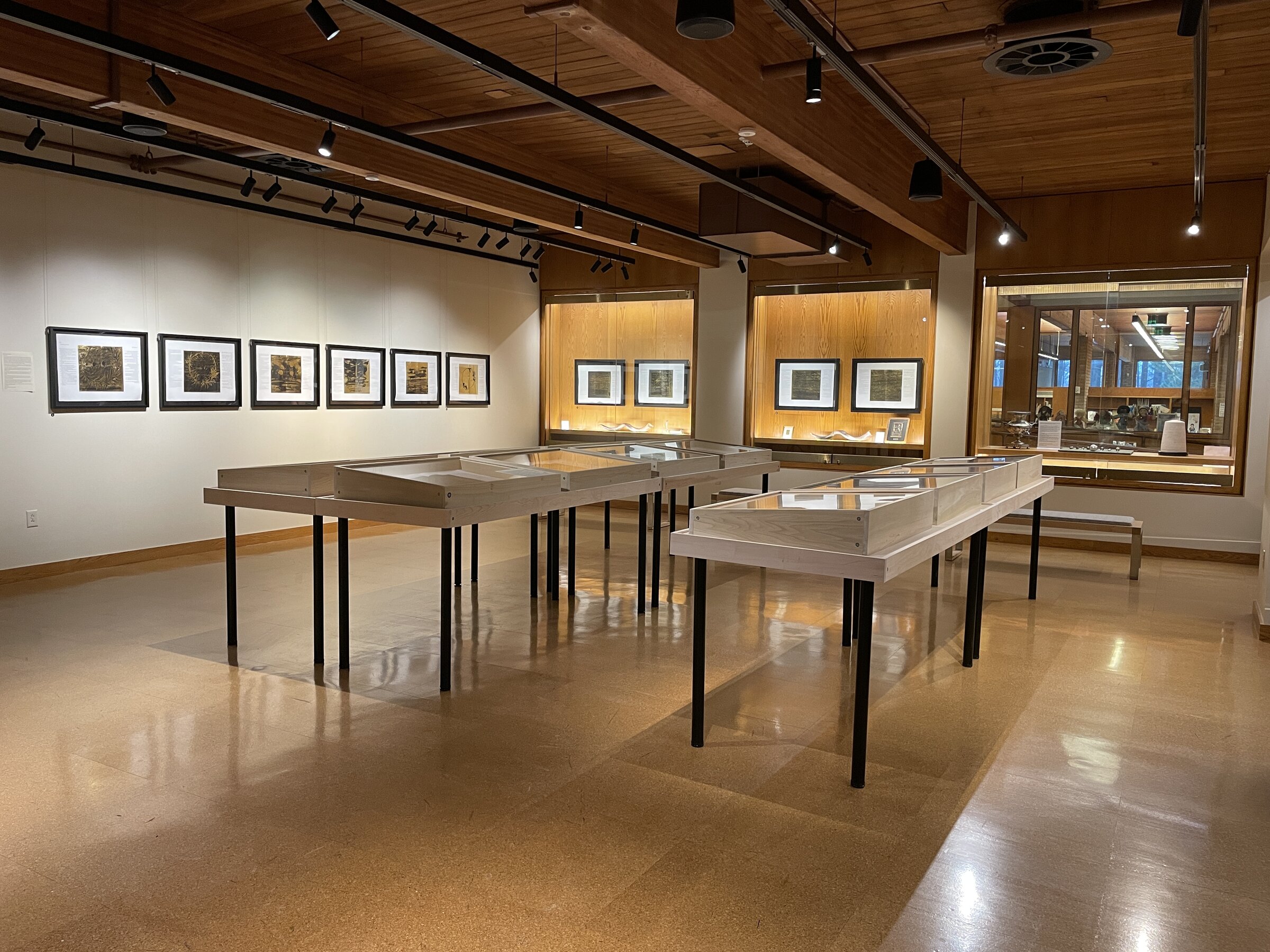
Exhibition view
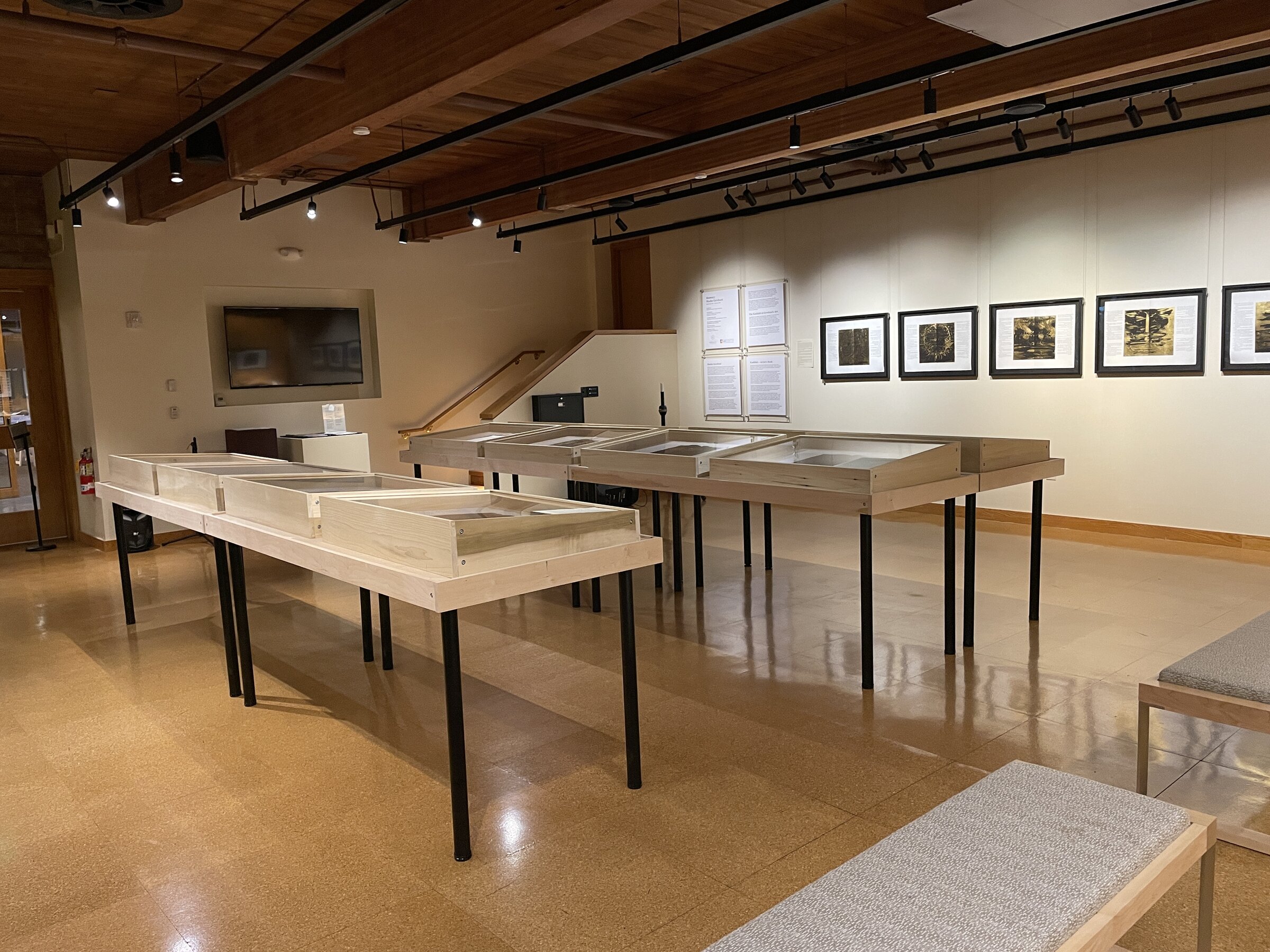
Exhibition view
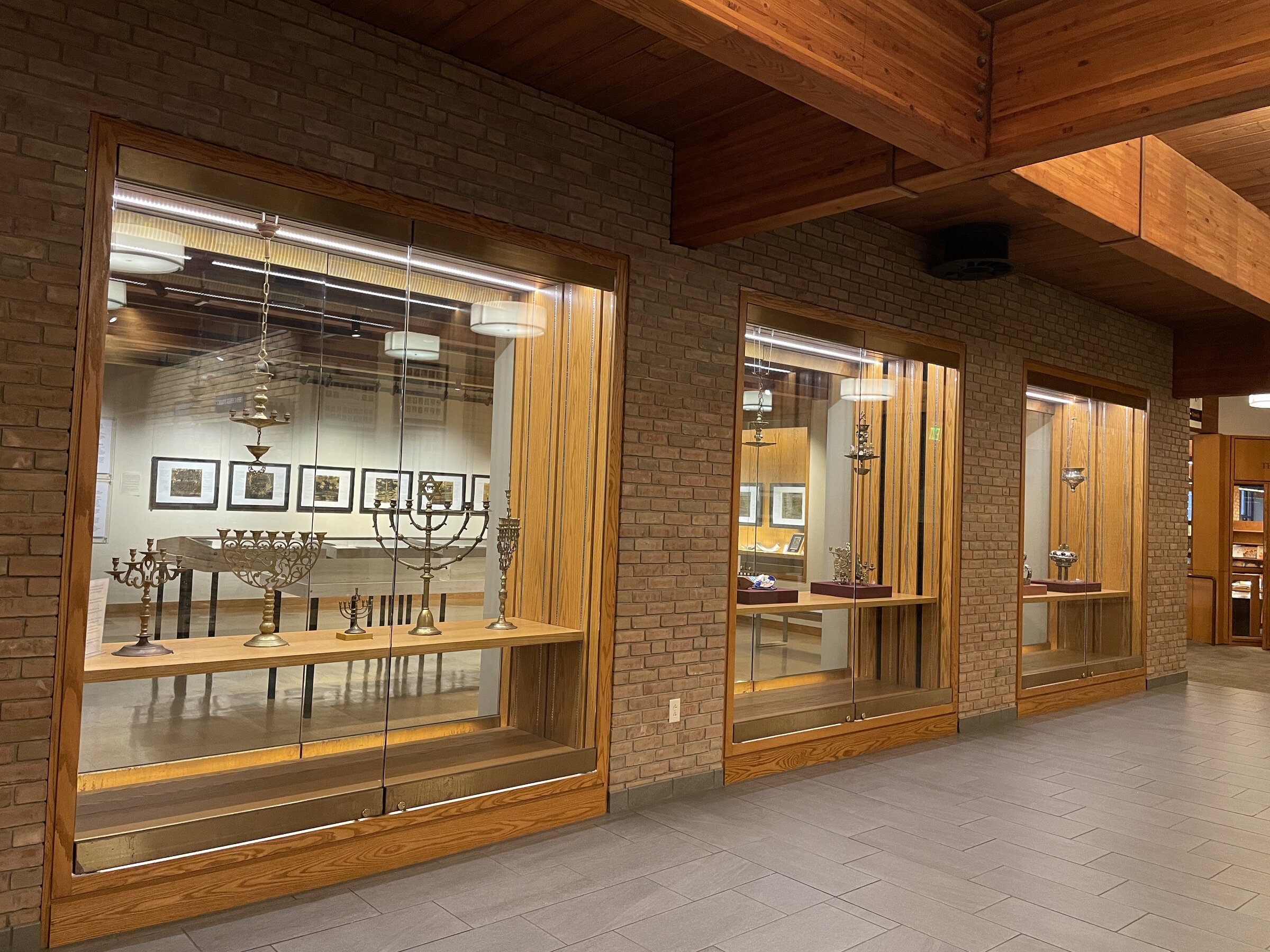
Hartzmark Gallery, Congregation Mishkan Or
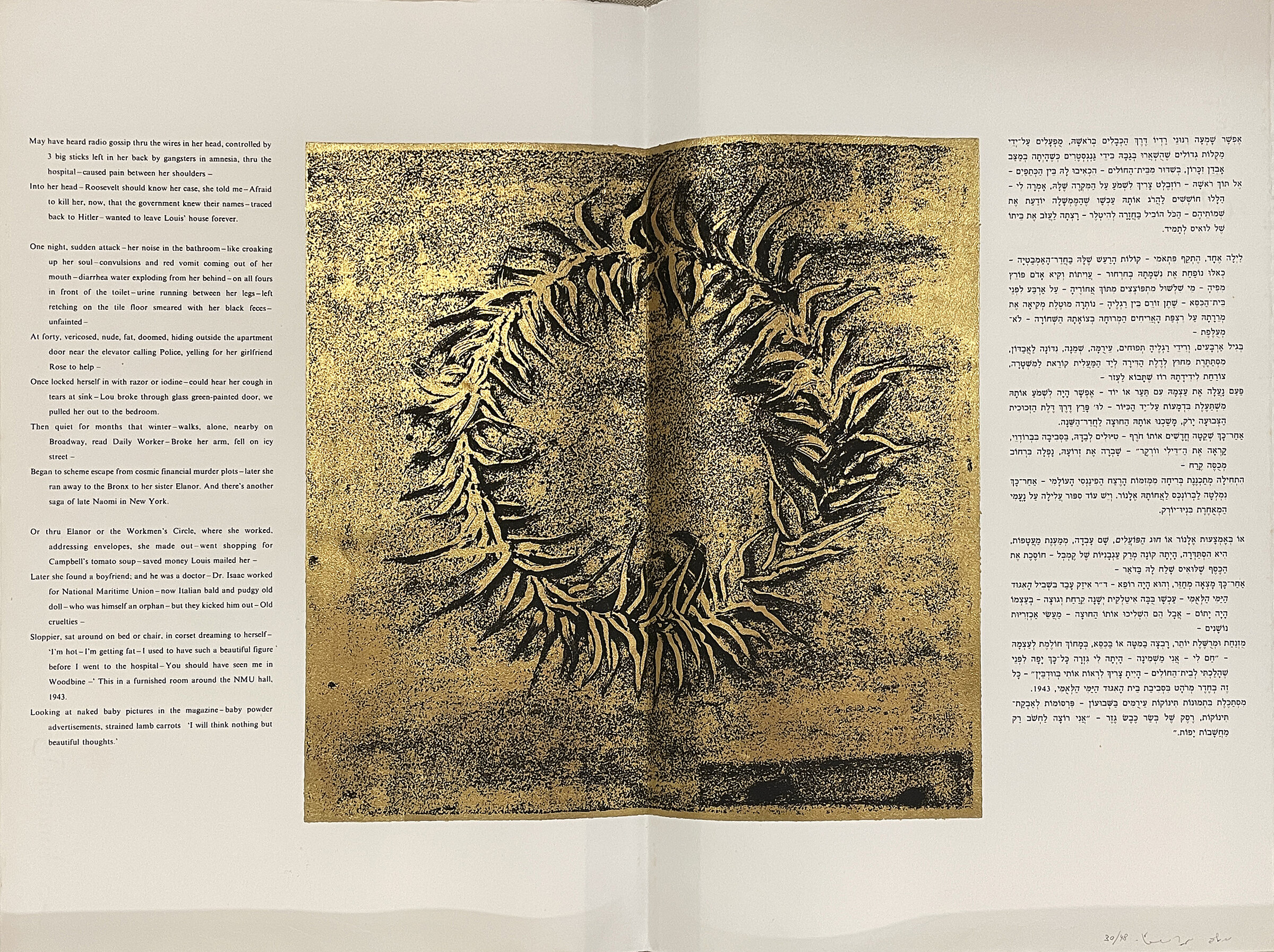
Moshe Gershuni, Kaddish, artist book with Allen Ginsberg’s poem, 1997; screen print on hand-laid golden metal foil leaf; Har-El printing workshop, Tel Aviv
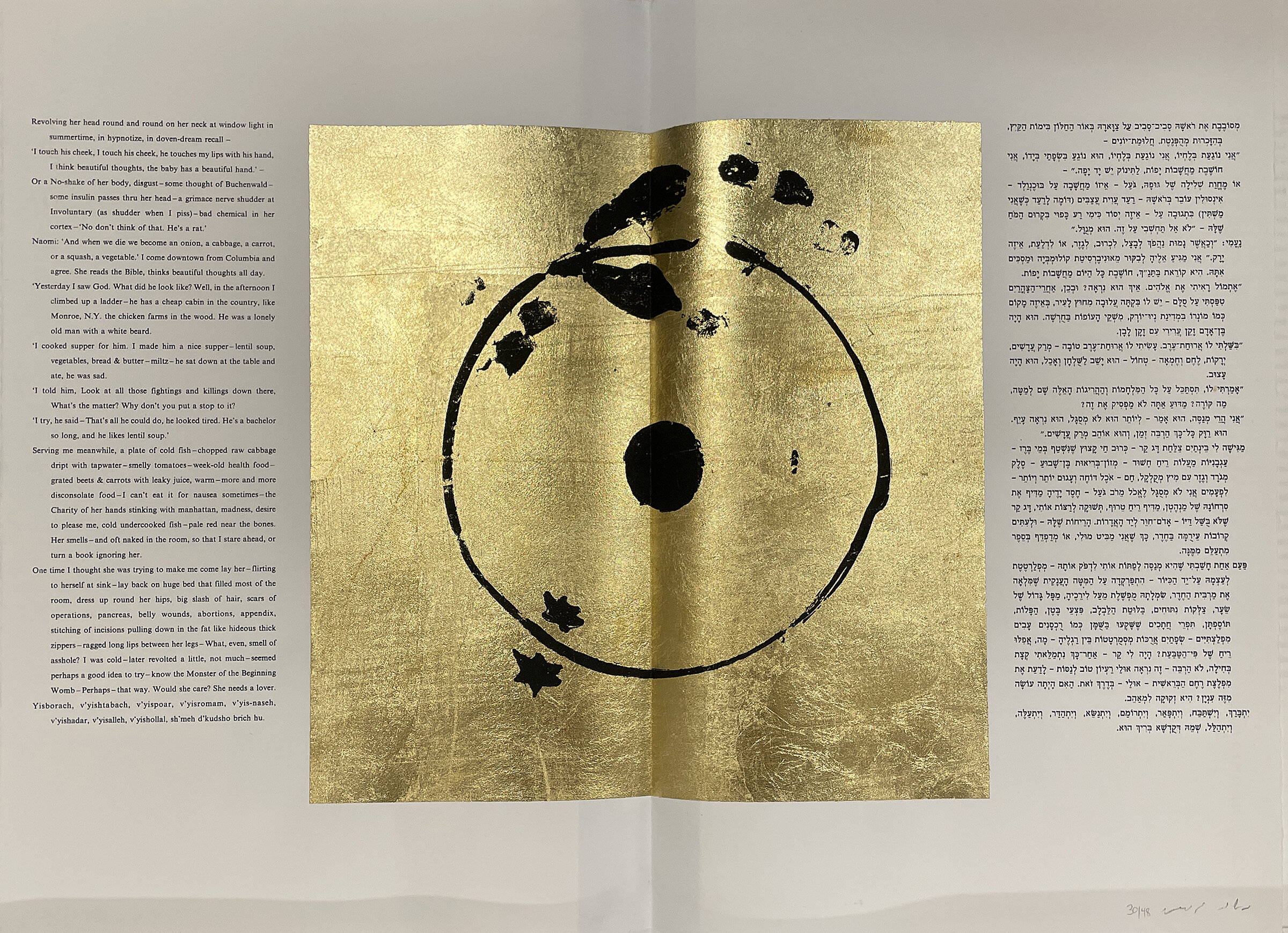
Moshe Gershuni, Kaddish, artist book with Allen Ginsberg’s poem, 1997; screen print on hand-laid golden metal foil leaf; Har-El printing workshop, Tel Aviv
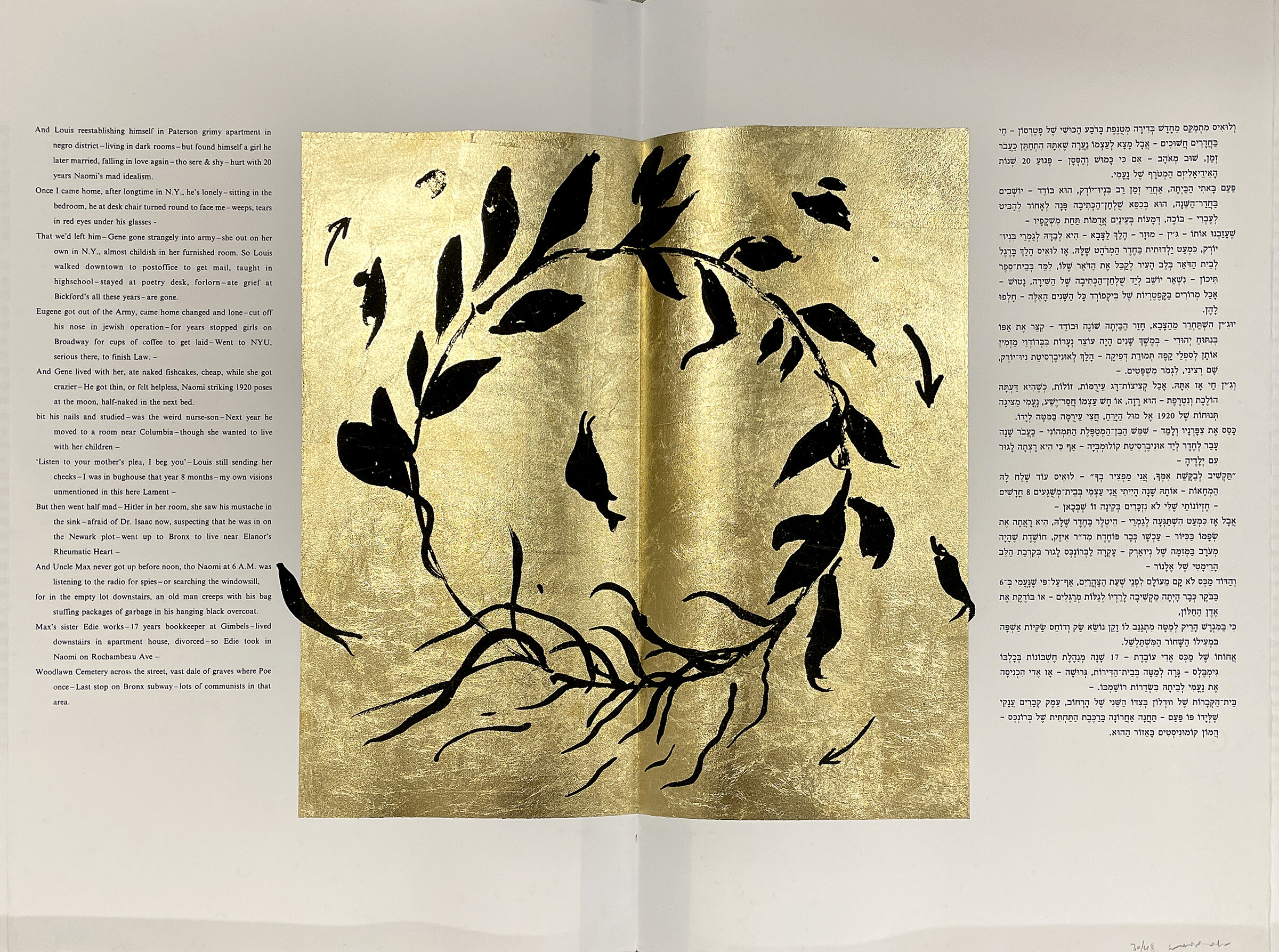
Moshe Gershuni, Kaddish, artist book with Allen Ginsberg’s poem, 1997; screen print on hand-laid golden metal foil leaf; Har-El printing workshop, Tel Aviv
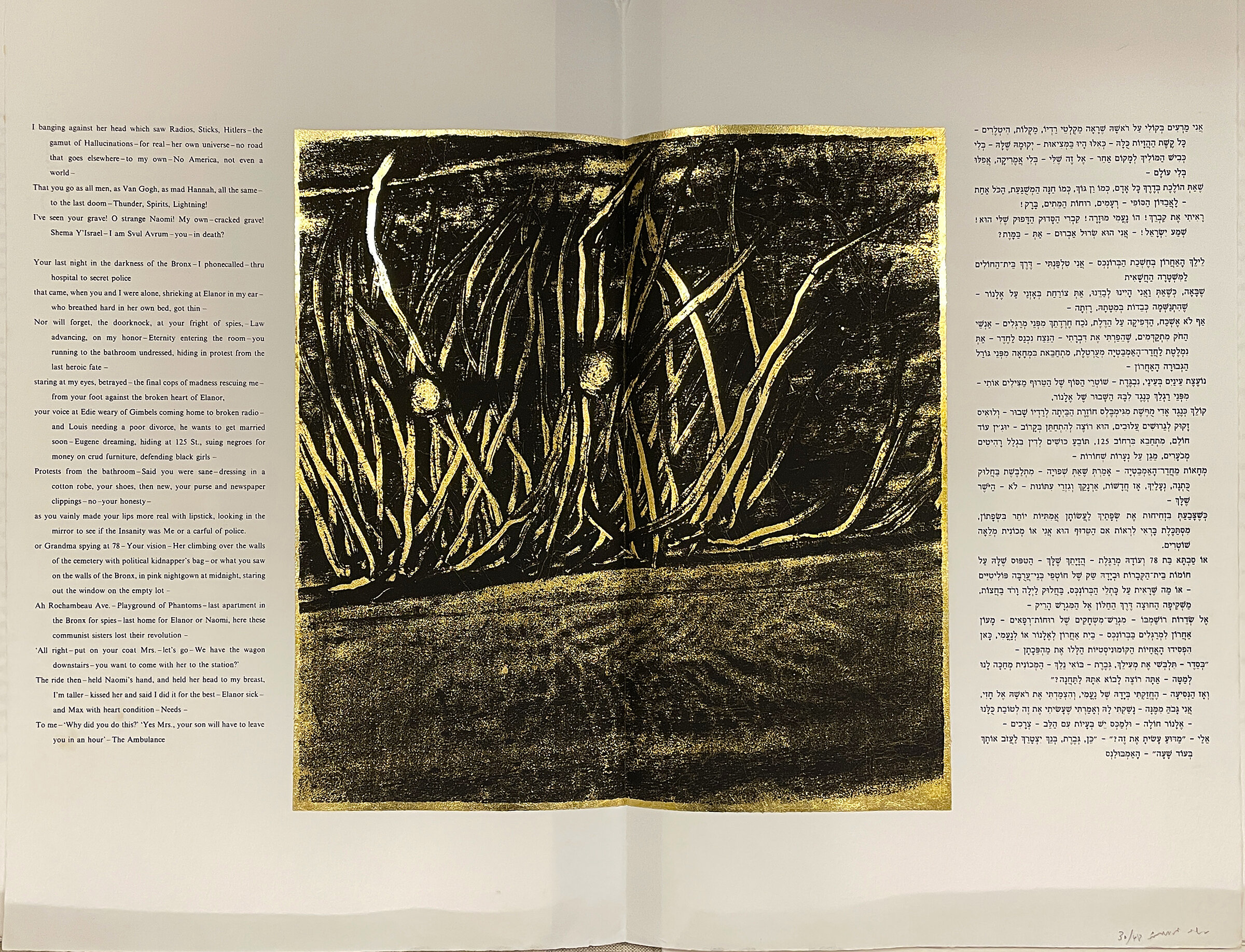
Moshe Gershuni, Kaddish, artist book with Allen Ginsberg’s poem, 1997; screen print on hand-laid golden metal foil leaf; Har-El printing workshop, Tel Aviv
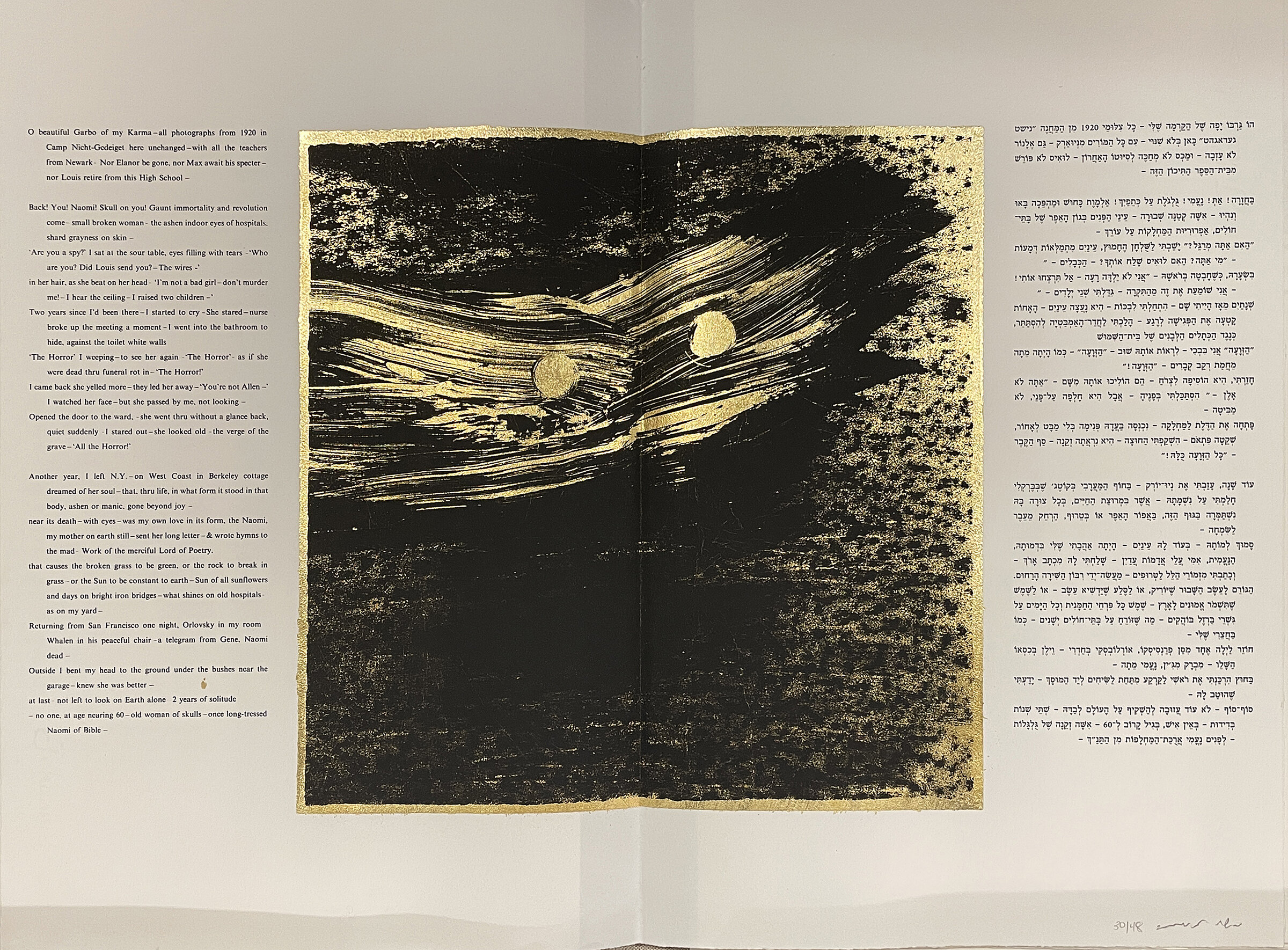
Moshe Gershuni, Kaddish, artist book with Allen Ginsberg’s poem, 1997; screen print on hand-laid golden metal foil leaf; Har-El printing workshop, Tel Aviv
Moshe Gershuni
Moshe Gershuni (1936–2017) belongs among the most important Israeli contemporary artists. His uncompromising and innovative practice charts Israeli art’s development from the 1970s to 2000s, embracing international conceptual trends while elaborating them for its own purposes. His unique oeuvre, often deemed controversial on his own turf, remains a poignant testimony to the complexity of contemporary Jewish experience and its universal relevance.
Born in Tel Aviv, Gershuni was the first of three children. His father, Zvi Kutner, studied agriculture in France before immigrating from Poland to Mandatory Palestine in 1929 to become a pioneer, growing orchards near Hertzelyah. Upon arrival, he assumed the name Gershuni. Zvi’s wife, Yona, had been an actress in Poland and became a milliner in Tel Aviv. The mildly observant family ensured young Moshe studied in religious schools through his grandfather’s insistence, resulting in firm knowledge of Jewish prayer and Biblical texts that later found expression in his art and love of liturgical poetry and singing.
As Europe darkened with the rise of Nazism, Gershuni’s parents procured entrance certificates to Mandatory Palestine for some Polish relations. The remaining family perished in the Holocaust, becoming a tragic presence in Gershuni’s life, recurrent in his art.
After his father’s sudden death in 1955, nineteen-year-old Moshe replaced him at the orchard while developing artistic interests. In 1960, continuing agricultural work, he enrolled in evening sculpture courses at Tel Aviv’s Avni Institute. The Avni teaching team included leading figures of the New Horizons local modernist movement, while also placing Gershuni among students who would soon form the core of Israeli-born art avant-garde.
During the 1970s Gershuni significantly contributed to the Israeli strand of conceptual, minimalist and performance art. His activities were rooted in local experiences and turbulent politics, often turning to the artist’s body and its ambiguous vulnerability. Yet he also created works drawing temporal parallels between his “safe” native Israeli life and the doom that befell European Jews, while acknowledging connection to the diasporic world of his religious grandfather.
In 1980 Gershuni represented Israel at the Venice Biennale with an installation focusing on suppressed Holocaust memory. After this significant European visit, his art turned into a highly expressive, personal idiom involving painting with hands and feet, crouching over large sheets of paper fusing glass paint, industrial varnishes and charcoal, as well as experimental printing media. This shift, following to some extent the German neo-expressionist trend with artists like Anselm Kiefer and Georg Baselitz, was linked specifically to Gershuni’s personal crises, depression and coming out as homosexual in the early 1980s.
From then onwards his works feature scribbles of Biblical verses, prayers, lines from Eretz Israel songs and poetry, references to Van Gogh and Mahler, and Hebrew phrases addressing soldiers. Those lamenting textual fragments partake in a distressed visual realm, simultaneously abject and beautiful, populated by swirling motifs: cyclamens, cypresses, wreaths, circles, flags, Stars of David, swastikas, rudimentary faces. Here desire and death, body and spirit, ecstasy and grief, belief and apostasy erupt through smears and smudges of paint and varnish, as if through bodily liquids.
Often against the grain of native celebratory narratives, the artist formulated a contradictory and almost blasphemous sense of torturous, but “stiff-necked” Israeli Jewishness arising from his deeply felt difference and unease living through the political turmoil and violence of the local reality. Gershuni’s devotion to maintaining tension between divergent elements constituting his art allowed him to channel the particularity of this Jewishness into a universal ecstatic vision of embracing otherness.
The Kaddish in Gershuni’s Art
The Kaddish, the Jewish mourning prayer, appeared in Gershuni’s art in 1984. Returning to it in the 1990s through prints and paintings, he introduced new motifs—withering wreaths and gold leaf. Wreaths announce victors, adorn brides, but also decorate graves and signify suffering. Gershuni’s black wreaths appear on golden surfaces that echo the yellow of industrial varnishes from his earlier work while referencing the gold of illuminated manuscripts, Christian icons and the reflective gold headplate worn by the High Priest at the Temple.
This series emerged during Israel’s traumatic decade spanning the Oslo Accords’ rise and fall, terrorist attacks, and the assassination in 1995 of the Prime Minister Yitzhak Rabin. The waning hope for political change can be read into these decaying wreaths, yet the Kaddish prayer and black circle on gold ground also invoke the sacredness and elevation of mourning and the grace of commemoration.
Kaddish – Artist Book
In this extraordinary artist book, Gershuni’s prints accompany Allen Ginsberg’s lamentation over his mother’s life and death, written between 1958–1959. Created in 1997, the year of Ginsberg’s passing, it becomes a Kaddish for the departed poet.
The encounter between the legendary Jewish-American beatnik poet (1928–1997) and the preeminent Jewish-Israeli avant-garde artist proves strangely harmonious. Both shared a common historical starting point in early 20th century Yiddish-speaking Polish/Russian Jewish communities—Ginsberg’s mother immigrated to America, Gershuni’s parents to Palestine, both escaping World War II. Despite different life trajectories, they shared post-war radical avant-garde culture, gay identity, impassioned devotion to their artistic quest, and torturous adherence to Jewish heritage—“worshiping the God included in it all,” in Ginsberg’s words.
Gershuni’s masterfully vague prints correspond perfectly to Ginsberg’s detailed, horrifying grief. Some images offer visual references to the text—empty circles radiating through dark ink clouds, or the cut-down mad flower ending the book. Others are gestures or textures that musically tune to the poem’s distressed state.
The prints tell a strangely unified tale of transformation through painterly gestures, interchanging gold backgrounds with black ink, and recognizable motifs: wreaths, circles, arrows, flowers, question marks. Suggestive of but never becoming eyes, faces, landscapes, figures, or symbols, these dynamic images interact with Ginsberg’s dense verse. Rather than illustrating, they embody in their evasiveness the work of memory and grief.
The book was produced as a limited edition of 48 copies at Har-El printing workshop in Tel Aviv. It features the Kaddish in English with Hebrew translation by the Israeli poet laureate Natan Zach, accomplished in close cooperation with Ginsberg. Twenty-four screen prints face bilingual text on Johannot paper, with black and white images executed on hand-laid golden metal foil leaf.
Exhibition view